
A Novel Perspective on the Wandering Hours by H. Moser & Cie.
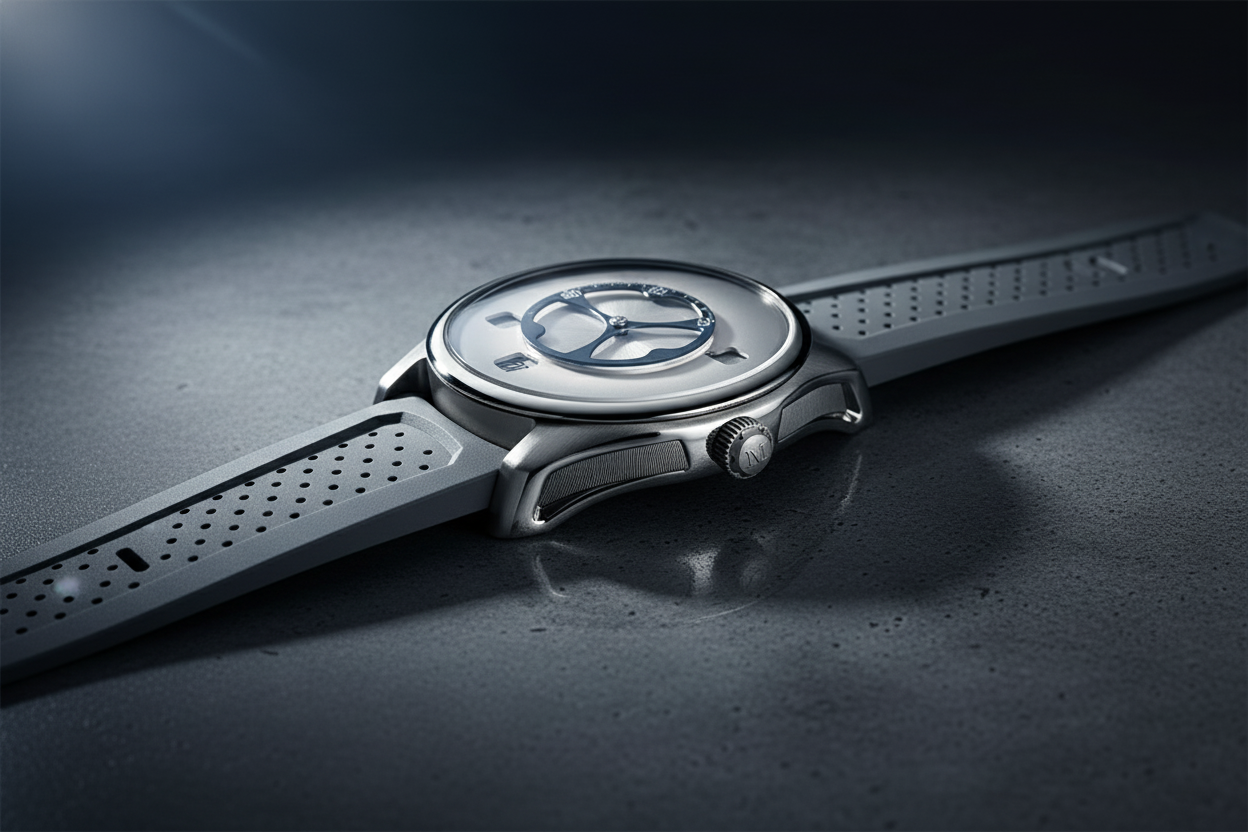
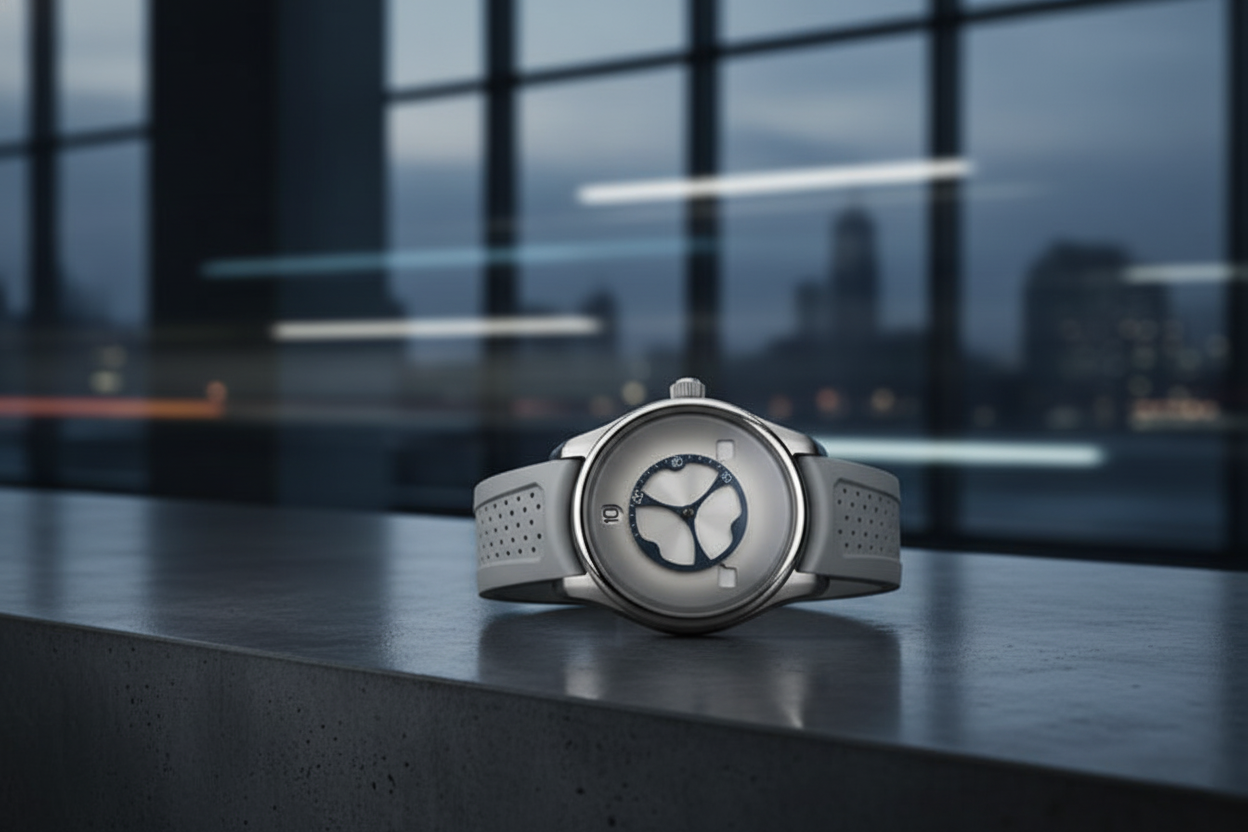
With the Pioneer Flying Hours, a fresh approach to the wandering hours, Schaffhausen based H. Moser & Cie. revisits a challenge it previously provided. While the hours appear to move from one window to the next, the watch displays the minutes on a central ring. The Flying Hours may be one of the most fascinating leaping hours available because to this amazing new presentation.
The Pioneer Flying Hours is not Moser’s first attempt at the wandering hours; the Endeavour Flying Hours, an update on the historical complexity, was introduced about seven years ago. But with the darting, roving display of the new Pioneer, Moser is able to convey the mystique of both early wandering hours and secret clocks.
Collectors will undoubtedly enjoy this neat and, to be honest, unique reimagining of the wandering hours. The minutes scale’s continuous movement over shuttered apertures has a poetic quality; its sweep resembles a bridge between points in time, depicted spatially in this instance.
The wandering hours, which are typically a problem linked with more formal, small cases, are particularly peculiar when combined with the sporty, spacious Pioneer case. Even for a sports watch, the size is big at over 43 mm. To be picky, if anything is offensive right away, that’s the name. In technical terms, “Flying hours” refers to a rotating platform that is only supported from below, analogous to a flying tourbillon. Only the minute scale is visible on the dial, while the hour discs and gear mechanism are buried beneath it.
The updated complication
The kind of useless but charming complexity that makes mechanical timepieces intriguing and alluring is the wandering hours. Clocks, pocket watches, and wristwatches from well-known brands like Audemars Piguet as well as independent designers like F. P. Journe are examples of the eccentric time-telling format’s ongoing appeal.
This Pioneer Flying Hours line’s use of the “flying” complexity is its most intriguing feature. Most wandering hours, like the Audemars Piguet Starwheel, have a carousel that slowly revolves around the dial with the hours disc pointing to a minutes’ sector. The hours disc is gradually indexed to the next place as the hour goes on thanks to the engagement of fixed fingers and hidden star wheels. Timekeeping itself may be impacted during this somewhat gradual adjustment because the process is not immediate and is relatively torque-intensive.
Moser chose to hide the hour discs and just show the current hour through dial apertures with the Pioneer Flying Hours, doing away with this slow-moving rotating spectacle. Moser also managed to jump from one hour to the next, giving the impression that the change happened instantly.
It’s interesting to note that while one of the apertures shows the current hour, the other two are hidden by a kind of shutter, which could be the trick behind Moser’s “instant” hour shift. Although further information is not yet available, it is possible that the shutter snaps instantly as the hour changes, but the hour discs shift at the same sluggish pace as they did in the Endeavour model. Consequently, the shutter piece hides the hour disc indexing as well as the only the current hour visible.
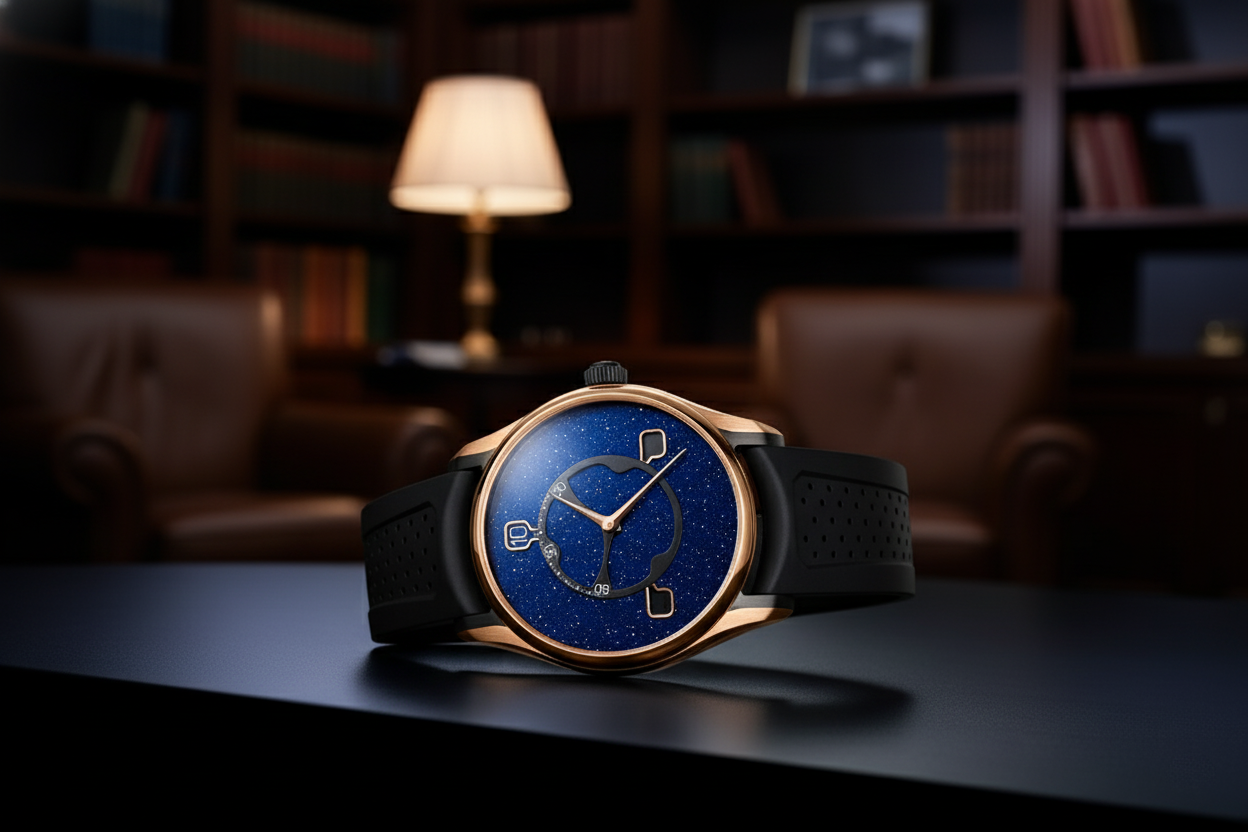
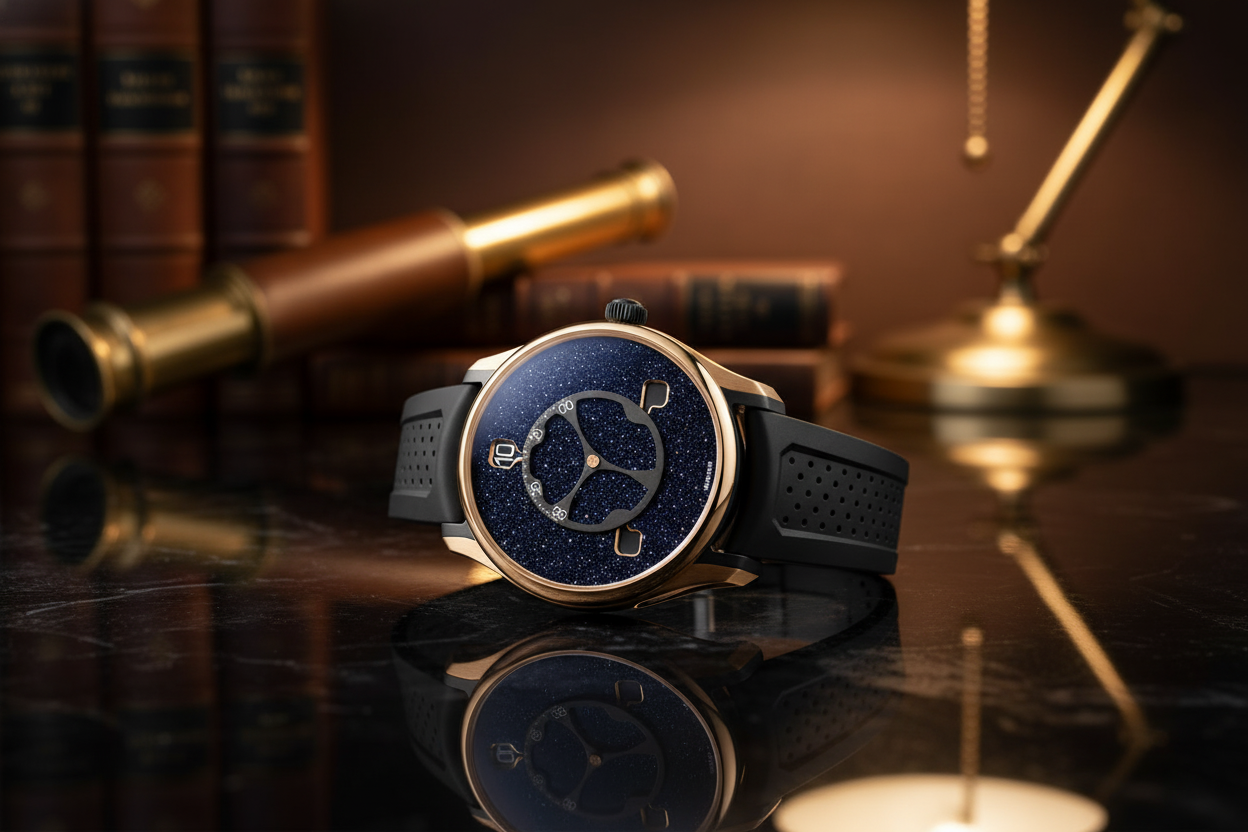
The centre minutes sector reads the minutes against the “active” aperture, which displays the current hour, as it sweeps the dial, completing a complete rotation every three hours. The shutter advances when the hour changes, the minutes sector now reads against it, and the next aperture in a clockwise manner indicates the hour, making it “active.”
Aventurine dial
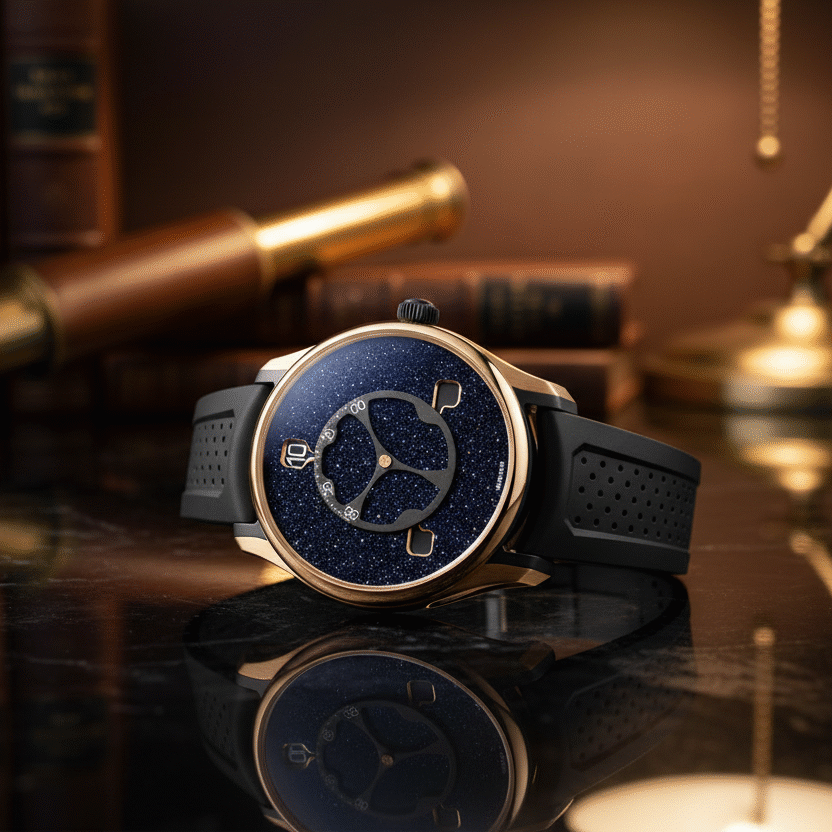
Although the sophisticated complication may seem a bit out of place in the sporty Pioneer case with a 120-meter rating, the Pioneer Flying Hours makes its premiere in two well-made models. There are only 100 of the rose gold example with a sci-fi theme. It features a glass product called aventurine with artificially added metallic particles. Each piece has a distinct midnight speckled-sky appearance as a result.
Sturdy motion
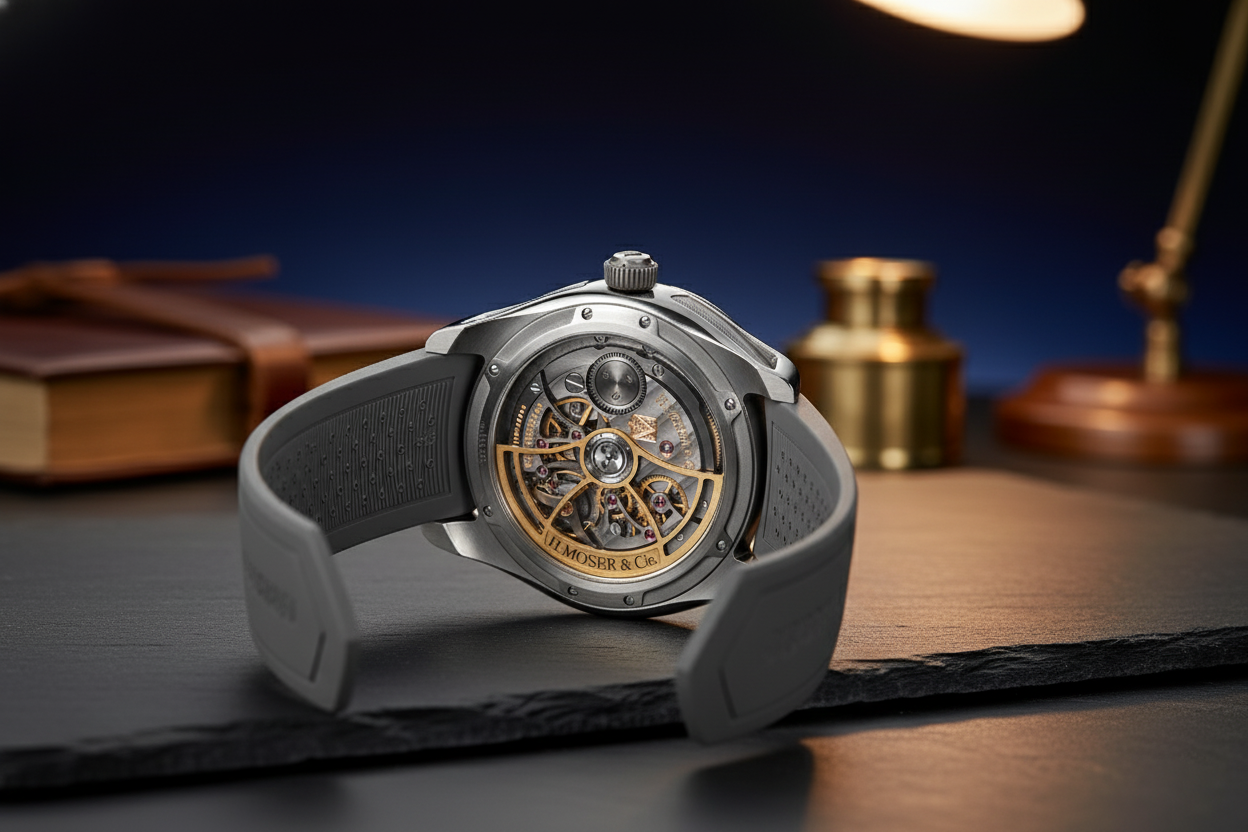
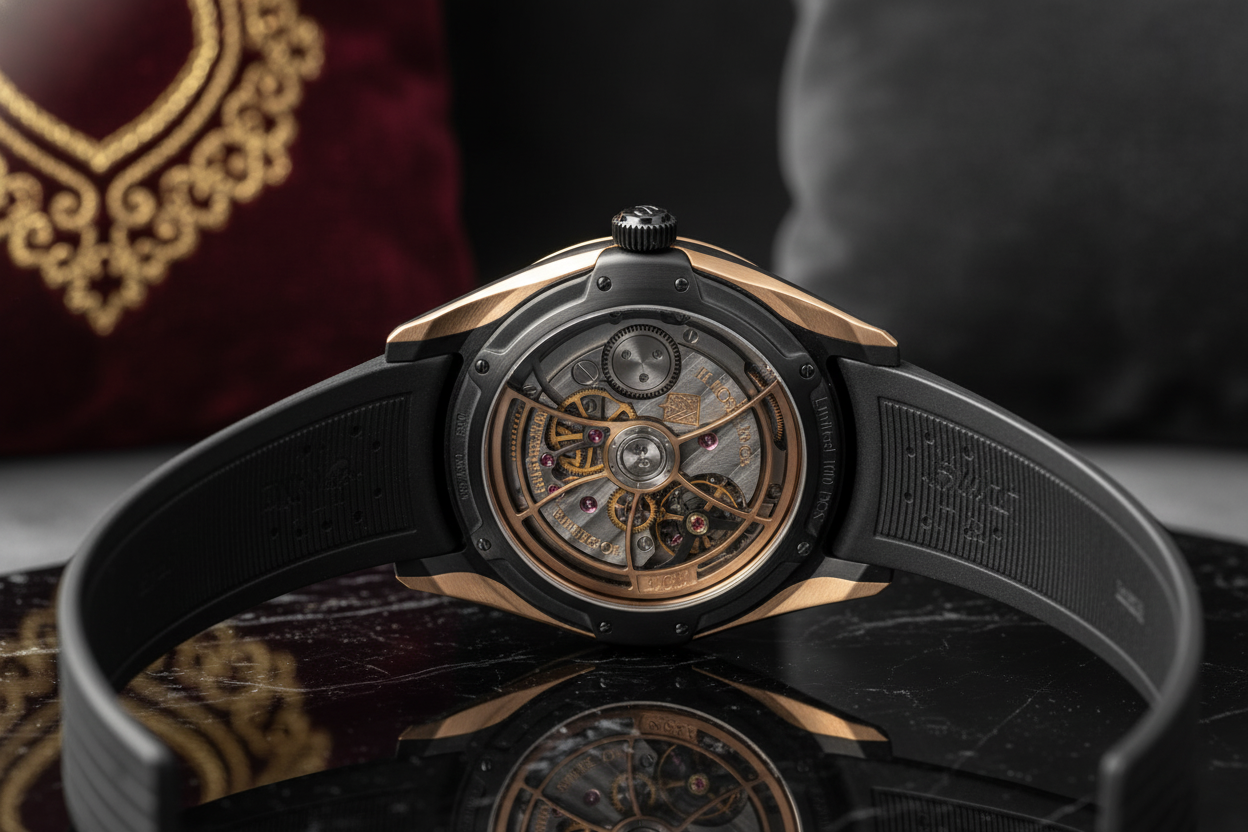
Moser’s internal automatic HMC 240 powers the Flying Hours. The movement, which aims for more contemporary styles across its calibre range, is in line with Moser’s latest attitude. With flawless machine finishing put over the anthracite-colored bridges, Moser does not let us down in terms of finishing. A minor shift towards increased production is also shown in the movement. Although Moser’s previous internal calibres had exceptional regulating organs and double barrel topologies, the current trend is towards more uniform construction.
The wandering hours module is based on the HMC 201 calibre, making the HMC 240 a modular movement. The 3 Hz movement’s bi-directional winding rotor allows it to retain 72 hours of power reserve on a single barrel. The majority of the escapement and going train are visible due to the caliber’s heavy yet elegant skeletonization. A flat Straumann hairspring manufactured by Precision Engineering is used in conjunction with the free-sprung balance. Given that this is intended to be a sports watch, the full balance bridge is a great feature.