
When Design Met Destiny: Gérald Genta, Credor, and the Watch That Defined Two Worlds
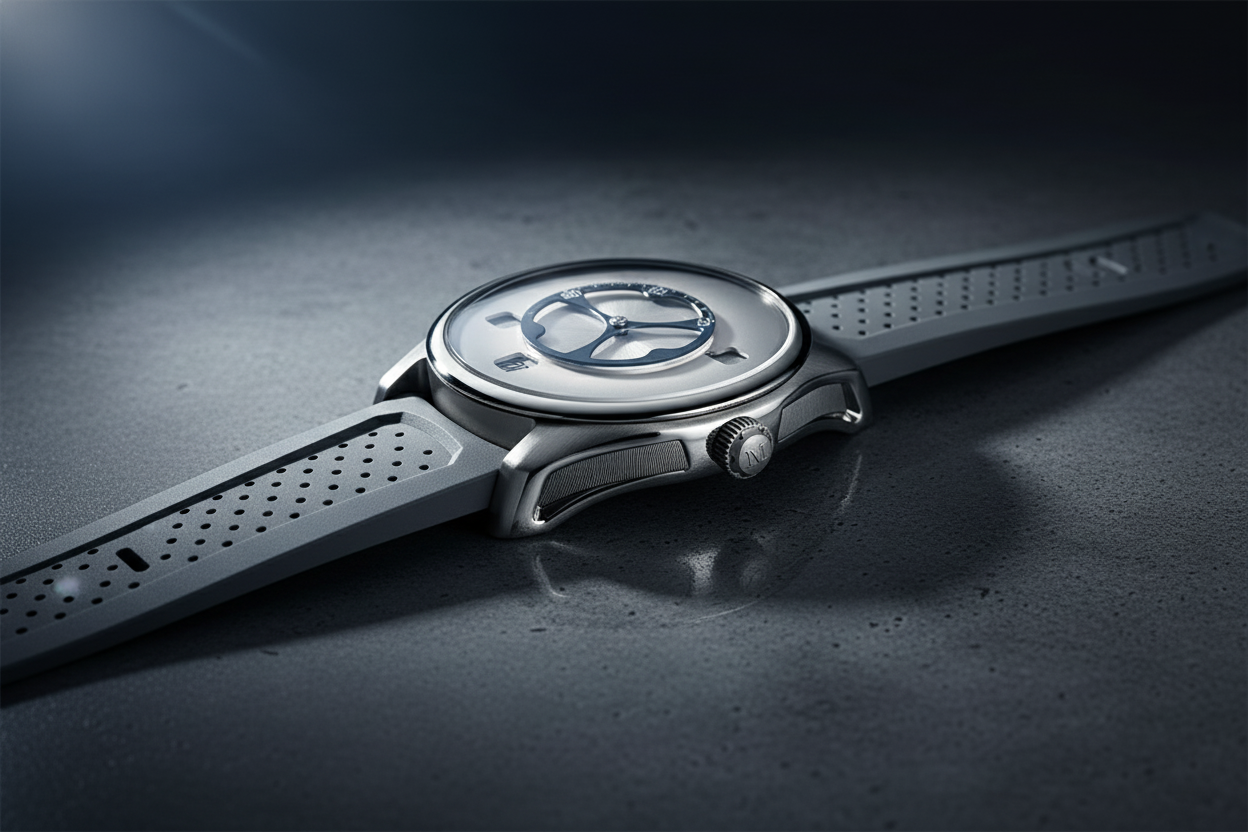
Few designers have had as much of an impact on contemporary watchmaking as Gérald Genta, yet few of his designs are as intimately revealing of his brilliance as the Credor Locomotive. It was a moment of rebirth, when the Swiss maestro who had transformed the Royal Oak and Nautilus at last found his own voice, long before it was reinvented in titanium for the twenty-first century.
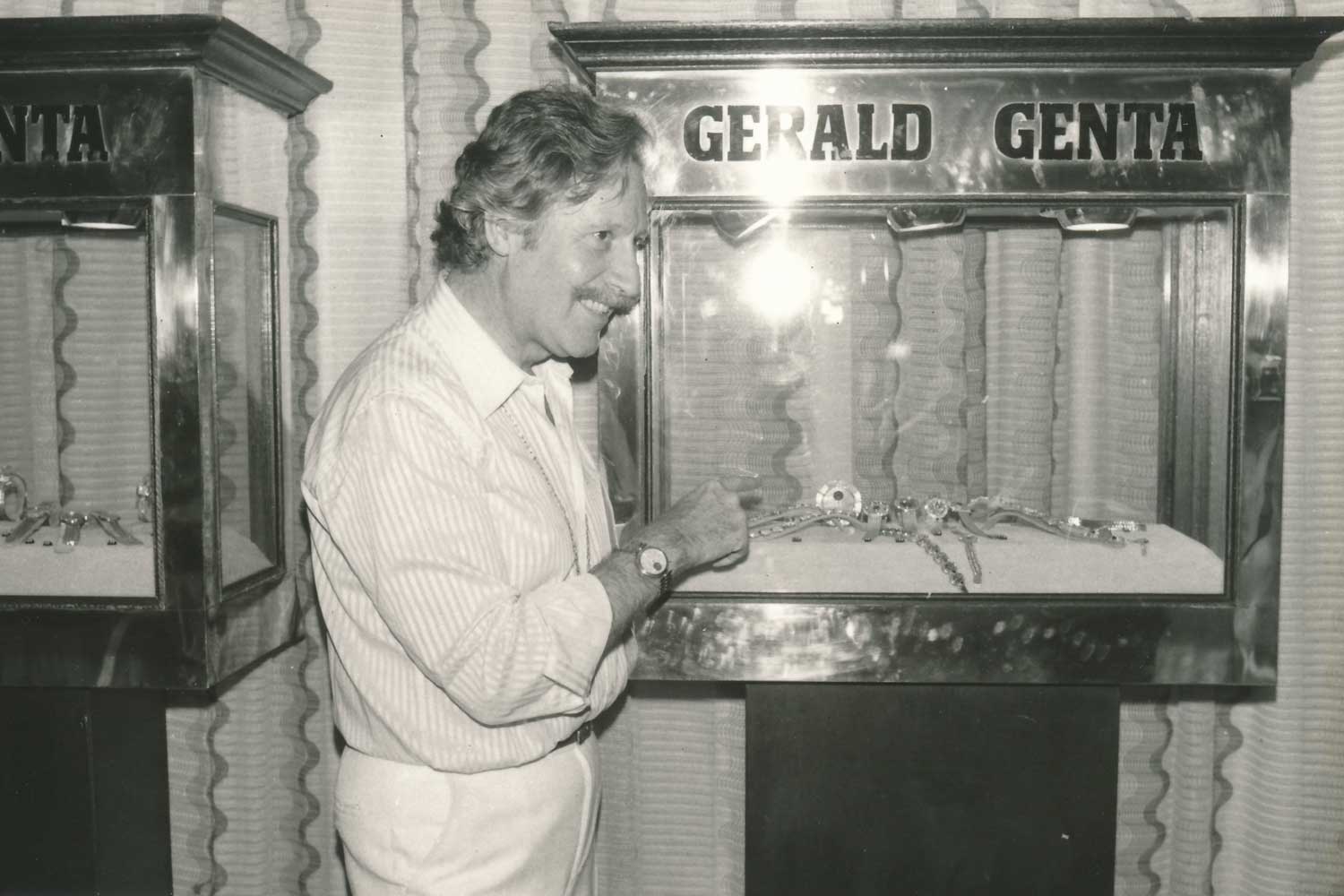
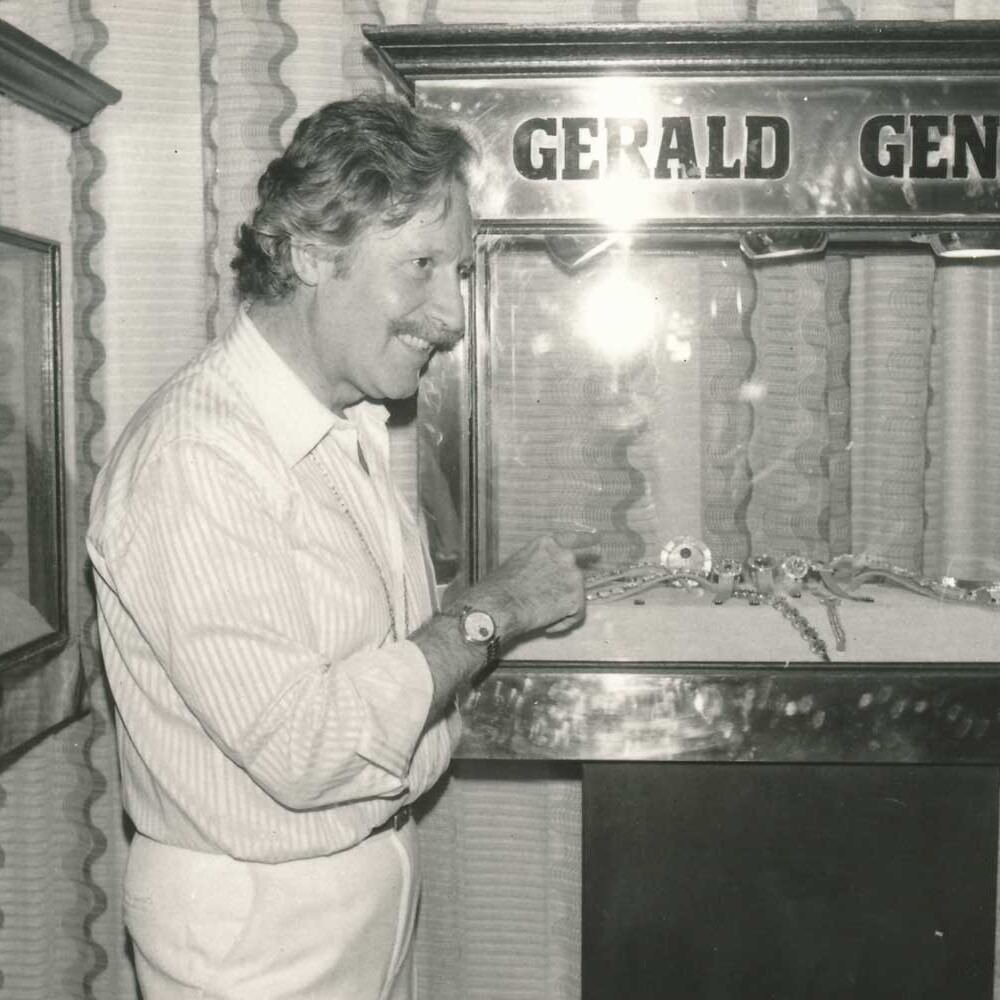
Genta saw inspiration rather than competition in 1979, when a large portion of the Swiss watch industry looked at Japan with cautious curiosity. One of the most significant changes in his career would be sparked by his collaboration with Reijirō Hattori, the grandson of Seiko’s founder. He received something far more than just another design brief from the project, a watch commissioned for Seiko’s luxury brand, Credor. It boosted his self-esteem.
That romance changed everything, according to his wife and collaborator for life, Evelyne Genta. She remembers that “Mr. Hattori told Gérald to stop hiding behind other brands and put his own name on a watch.” He did not view him as a supply, but as an artist. At that point, he also started to perceive himself in that light.
A Design Without Boundaries
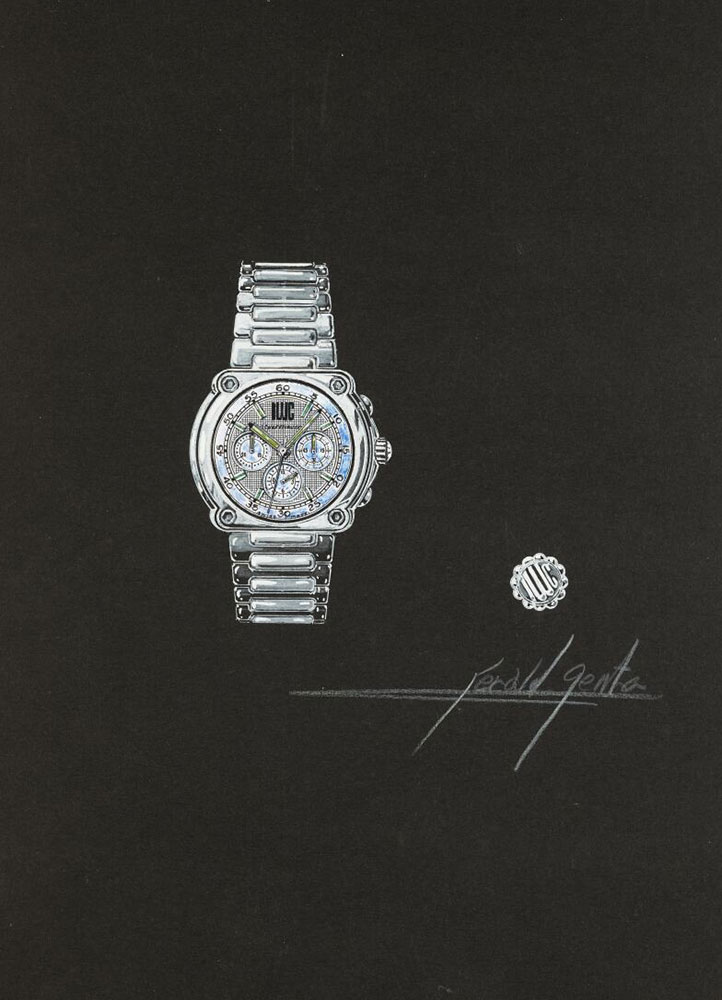
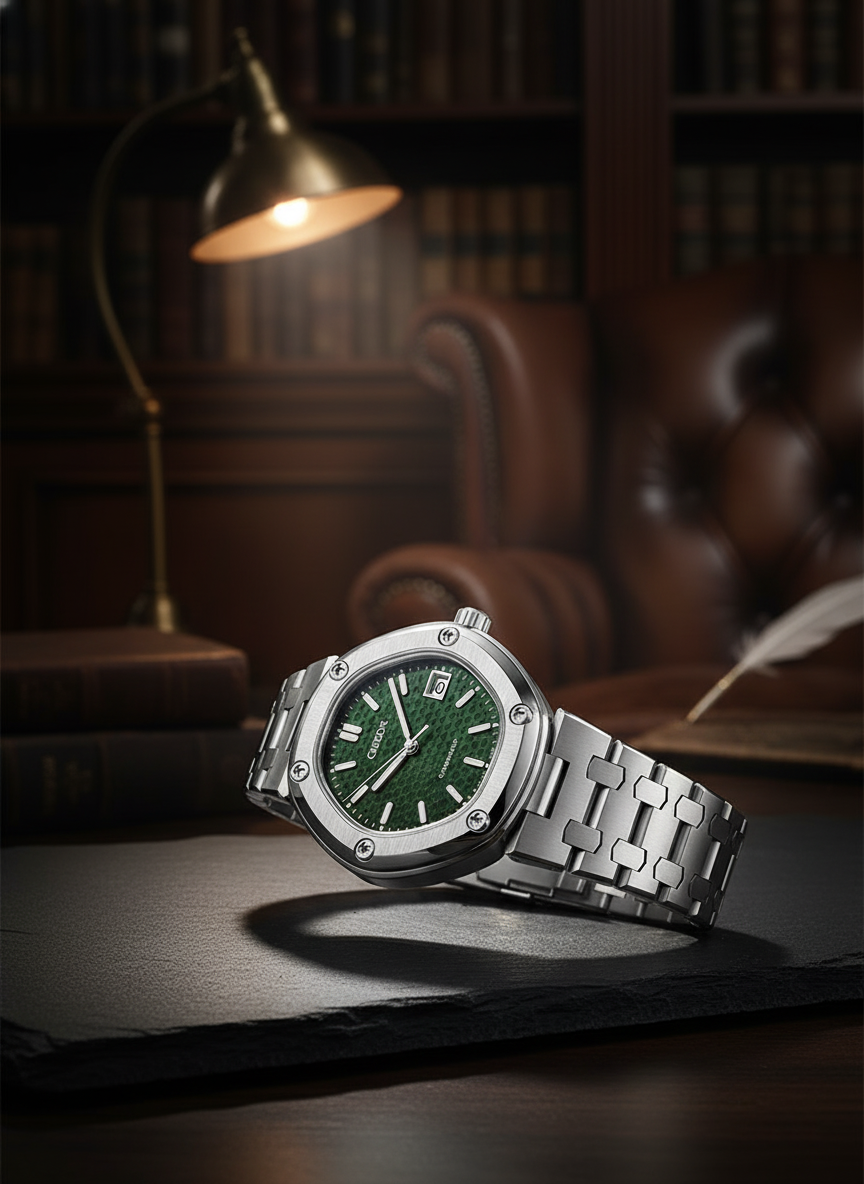
Genta had never made anything like the Credor Locomotive. The Locomotive represented something more subdued, a dialogue between two cultures equally fixated on accuracy and perfection, whilst the Royal Oak represented industrial charm and the Nautilus oceanic elegance. Its hexagonal bezel took the place of Genta’s trademark octagon, which is uncommon in his repertory. The shape was intentional; it was a reference to Japanese geometry, which combines angular strength and circular balance. Its dial’s honeycomb design, which was accentuated by opposing light reflections, created the poetic illusion of color transitions within a single shade, echoing Japanese minimalism.
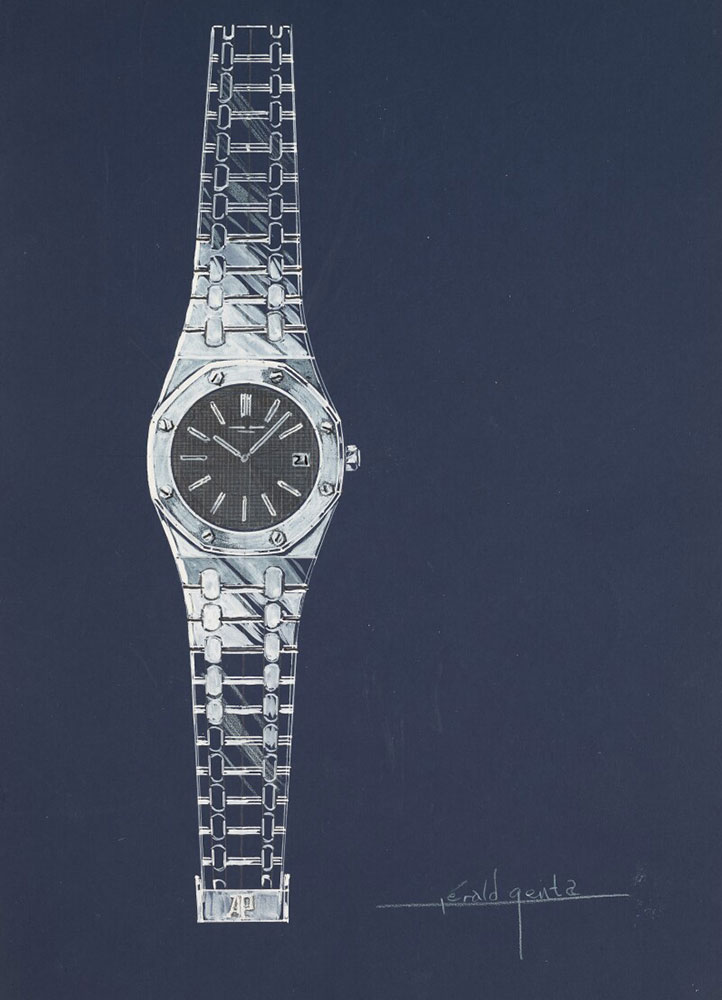
His profound grasp of structure was demonstrated by the intricate and architectural bracelet. Genta had began his work as a bracelet designer at Gay Frères, and he viewed metal like sculpture , creating tension, proportion, and harmony from what others perceived as mechanics. Each screw and edge had a purpose. Nothing was decorative, yet every surface conveyed peaceful luxury. Evelyne claims that “you can see his mind working when you look at the Locomotive.” It is not a bracelet watch, but it is an integrated one. Like a musical breath between notes, the negative space between the case and the bracelet gives it rhythm.
A Partnership That Changed Watchmaking
For Genta, Japan was a discovery rather than a rival. He refused to give in to nostalgia during the height of the Quartz Crisis, when Swiss workshops closed and mechanical movements appeared to be outdated. He turned his gaze to the East, to a society that valued artistry and flaws as components of beauty. Evelyne muses, “Gérald loved the way the Japanese used gold to fix broken things.” “He saw in that philosophy the same truth that time and touch give value, just like in watchmaking.”
The encounter between Hattori and Genta served as the catalyst for his eventual independence. He will soon introduce his own brand, which was practically unimaginable in a traditional market where designers were hidden behind maison names. In retrospect, the locomotive served as a link between two worlds: Swiss creativity and Japanese discipline, as well as between personal growth and prior accomplishment.
A Legacy Revived
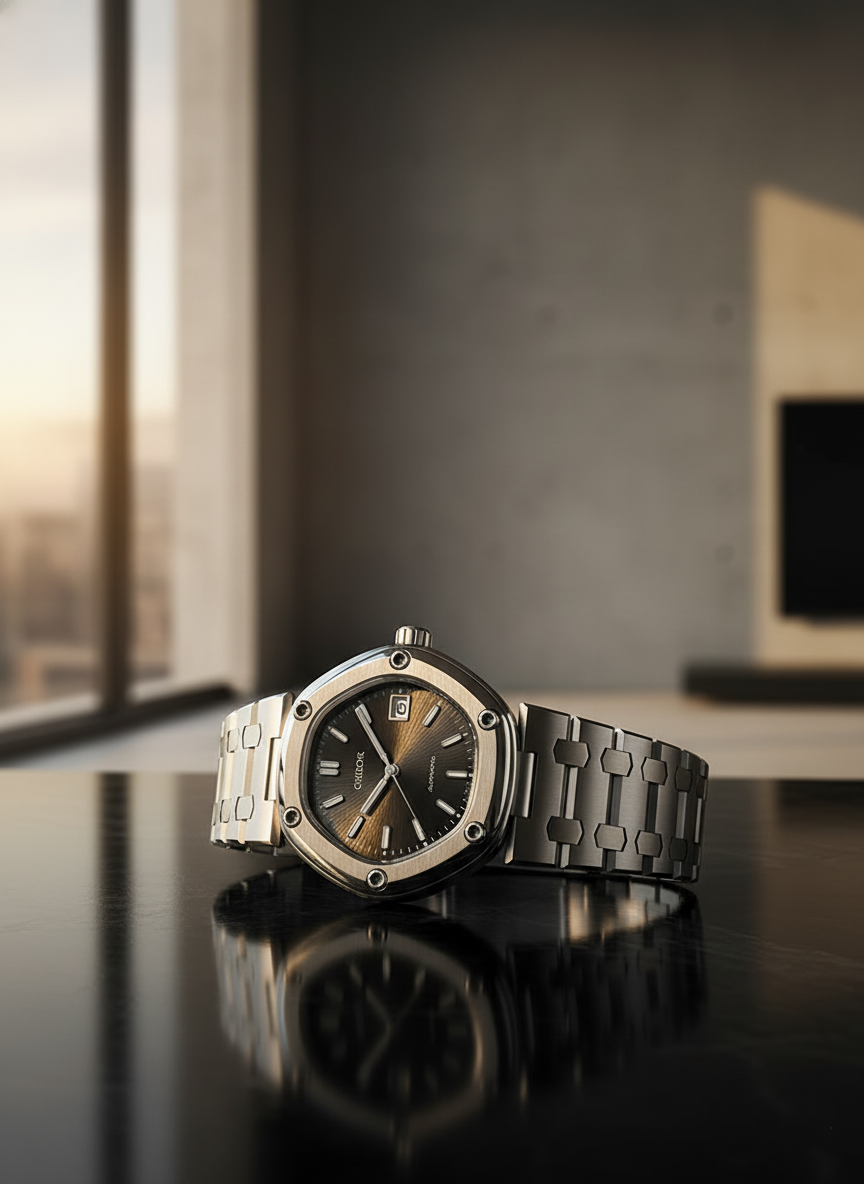
Evelyne Genta gave her immediate approval when Credor made the decision to bring the Locomotive back to life decades later. With its deep forest-green dial and high-intensity titanium construction, the 2025 edition honors Genta’s iconic dimensions of 38.8mm across and an incredibly compact 8.9mm. Its honeycomb dial, which is made up of alternate grooves, moves with the light like silk. According to Evelyne, “the design feels alive.” “Gérald would have loved the human touch, the patience, and the accuracy.” It is an ideal continuation of his beliefs.
In a society that is frequently dominated by hype and algorithms, Genta’s worldview is still relevant today. He felt that no machine could replicate the warmth of human labor, and that true beauty necessitated imperfection. “He didn’t have a fear of technology,” Evelyne says quietly. “He just knew it couldn’t replace feeling.”
The Art of Time
The Credor Locomotive is still regarded as one of Gérald Genta’s most intimate works, not because it was his most daring or well-known design, but rather because it perfectly encapsulated his metamorphosis. In a world that was changing all around him, it symbolizes a designer breaking free from the brands he had established and discovering his own rhythm.
In every way, it is a watch between the East and the West, between engineering and art, between genius and humility.
Evelyne states, “I feel optimistic when I wear it, the same feeling Gérald had when he drew it for the first time.” It serves as a reminder that beauty simply takes on new forms and never truly goes away.