

When Design Met Destiny: Gérald Genta, Credor, and the Watch That Defined Two Worlds
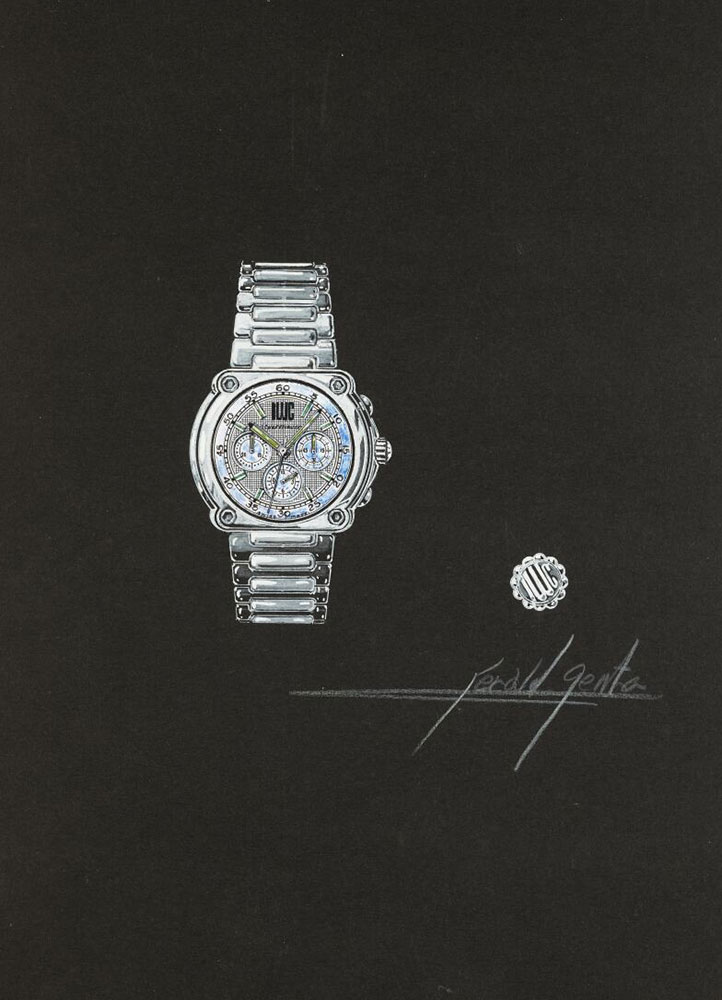
Few designers have had as much of an impact on contemporary watchmaking as Gérald Genta, yet few of his designs are as intimately revealing of his brilliance as the Credor Locomotive. It was a moment of rebirth, when the Swiss maestro who had transformed the Royal Oak and Nautilus at last found his own voice, long before it was reinvented in titanium for the twenty-first century.
Genta saw inspiration rather than competition in 1979, when a large portion of the Swiss watch industry looked at Japan with cautious curiosity. One of the most significant changes in his career would be sparked by his collaboration with Reijirō Hattori, the grandson of Seiko's founder. He received something far more than just another design brief from the project, a watch commissioned for Seiko's luxury brand, Credor. It boosted his self-esteem.
That romance changed everything, according to his wife and collaborator for life, Evelyne Genta. She remembers that "Mr. Hattori told Gérald to stop hiding behind other brands and put his own name on a watch." He did not view him as a supply, but as an artist. At that point, he also started to perceive himself in that light.
A Design Without Boundaries
Genta had never made anything like the Credor Locomotive. The Locomotive represented something more subdued, a dialogue between two cultures equally fixated on accuracy and perfection, whilst the Royal Oak represented industrial charm and the Nautilus oceanic elegance. Its hexagonal bezel took the place of Genta's trademark octagon, which is uncommon in his repertory. The shape was intentional; it was a reference to Japanese geometry, which combines angular strength and circular balance. Its dial's honeycomb design, which was accentuated by opposing light reflections, created the poetic illusion of color transitions within a single shade, echoing Japanese minimalism.
His profound grasp of structure was demonstrated by the intricate and architectural bracelet. Genta had began his work as a bracelet designer at Gay Frères, and he viewed metal like sculpture , creating tension, proportion, and harmony from what others perceived as mechanics. Each screw and edge had a purpose. Nothing was decorative, yet every surface conveyed peaceful luxury. Evelyne claims that "you can see his mind working when you look at the Locomotive." It is not a bracelet watch, but it is an integrated one. Like a musical breath between notes, the negative space between the case and the bracelet gives it rhythm.
A Partnership That Changed Watchmaking
For Genta, Japan was a discovery rather than a rival. He refused to give in to nostalgia during the height of the Quartz Crisis, when Swiss workshops closed and mechanical movements appeared to be outdated. He turned his gaze to the East, to a society that valued artistry and flaws as components of beauty. Evelyne muses, "Gérald loved the way the Japanese used gold to fix broken things." "He saw in that philosophy the same truth that time and touch give value, just like in watchmaking."
The encounter between Hattori and Genta served as the catalyst for his eventual independence. He will soon introduce his own brand, which was practically unimaginable in a traditional market where designers were hidden behind maison names. In retrospect, the locomotive served as a link between two worlds: Swiss creativity and Japanese discipline, as well as between personal growth and prior accomplishment.
A Legacy Revived
Evelyne Genta gave her immediate approval when Credor made the decision to bring the Locomotive back to life decades later. With its deep forest-green dial and high-intensity titanium construction, the 2025 edition honors Genta's iconic dimensions of 38.8mm across and an incredibly compact 8.9mm. Its honeycomb dial, which is made up of alternate grooves, moves with the light like silk. According to Evelyne, "the design feels alive." "Gérald would have loved the human touch, the patience, and the accuracy." It is an ideal continuation of his beliefs.
In a society that is frequently dominated by hype and algorithms, Genta's worldview is still relevant today. He felt that no machine could replicate the warmth of human labor, and that true beauty necessitated imperfection. "He didn't have a fear of technology," Evelyne says quietly. “He just knew it couldn’t replace feeling.”
The Art of Time
The Credor Locomotive is still regarded as one of Gérald Genta's most intimate works, not because it was his most daring or well-known design, but rather because it perfectly encapsulated his metamorphosis. In a world that was changing all around him, it symbolizes a designer breaking free from the brands he had established and discovering his own rhythm.
In every way, it is a watch between the East and the West, between engineering and art, between genius and humility.
Evelyne states, "I feel optimistic when I wear it, the same feeling Gérald had when he drew it for the first time." It serves as a reminder that beauty simply takes on new forms and never truly goes away.

Richard Mille RM 63-02 Worldtimer: A Novel Approach to Travel Time
Richard Mille's most recent invention, the RM 63-02 Worldtimer, is one of the few watches that successfully blends intricacy, functionality, and spectacle. A 47 mm pink gold and titanium case encircling a bezel-controlled global time mechanism that transforms geography into performance art is the latest aesthetic spin on one of the brand's most intricate travel complexities.
A world of machines at your fingertips
Despite the fact that daylight savings and half-hour time zones frequently undermine their accuracy, world time watches have long offered a romantic connection to the world traveler. The RM 63-02 uses mechanical creativity to overcome the flaw. To switch between cities, the wearer just spins the bezel rather than using a crown or pushers. With each click, the 24-hour ring, date, and hour hand move in unison, driven by a planetary differential that converts the action of the bezel into mechanical time movements.
It's a sophisticated idea carried out with the audacity that defines Richard Mille. 24 cities representing different time zones are displayed on the rotating bezel; the city that is at 12 o'clock is designated as "home." A tiny mechanical theater that transforms jet-lag management into something enjoyable is the bezel, which can be turned counterclockwise to instantaneously change the local time
Architecture of motion
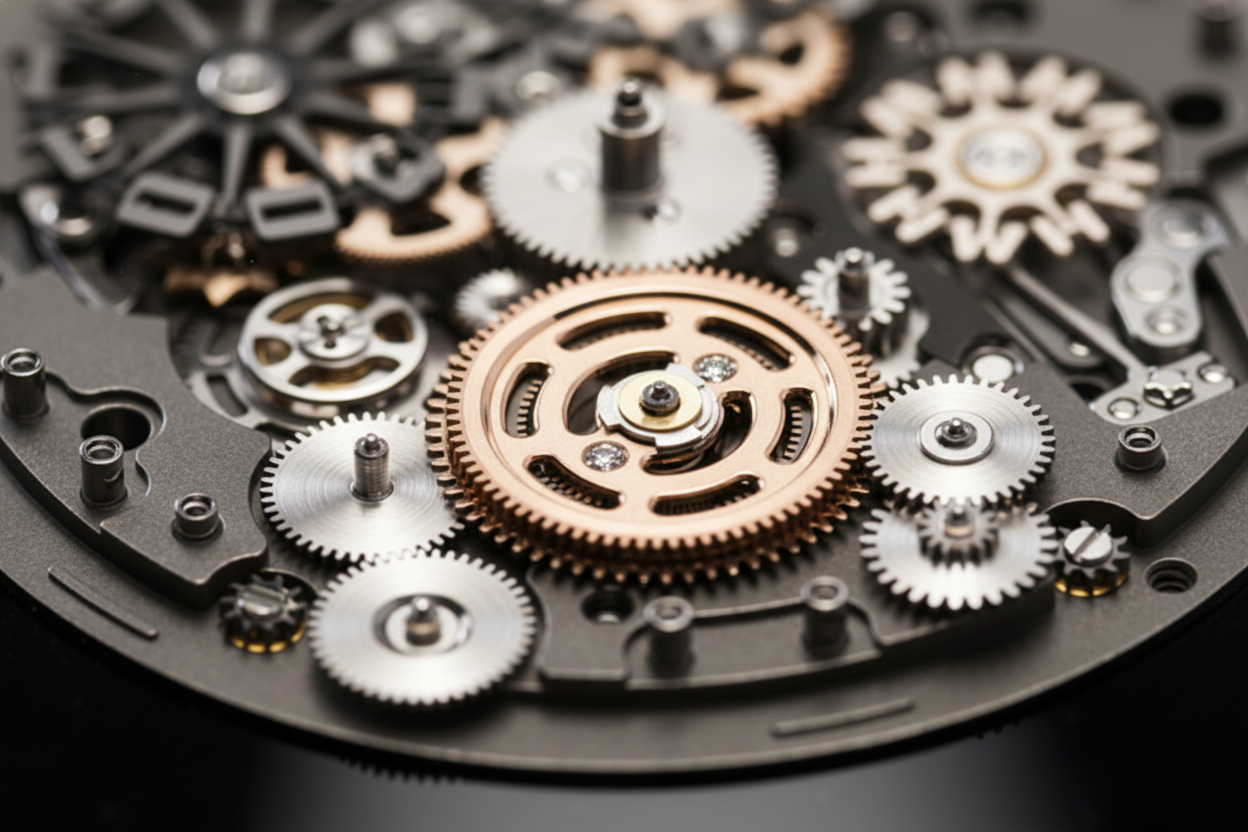
The CRMA4 calibre, a proprietary movement with a rose-gold rotor and almost 34 mm across, is housed inside the RM 63-02. It is composed of titanium plates and bridges coated with titanium. Strong chronometric performance is ensured by its 4 Hz oscillating free-sprung balance. Similar to Greubel Forsey, the action maintains power and precision by reducing internal friction through a fast-rotating barrel.
Although futuristic designs and cutting-edge materials are frequently linked to Richard Mille watches, the execution of this model is unexpectedly elegant. The case, which has more than 100 separate components, varies between brushed titanium and polished rose gold to provide warmth and technical contrast. A wearable paradox for such a commanding watch is that, despite its enormous 47 mm diameter, the brand's iconic curving case back fits snugly around the wrist at 14 mm.
Form meets function
Skeletonized bridges, brilliant pink accents, and bold dauphine hands with diamond-cut bevels and pink Super-Lumi Nova are just a few of the layers that make up the sapphire crystal dial. When changing time zones, the double-disk date display at 12 o'clock advances automatically, but it may also be independently adjusted using the pusher at 10 o'clock. In homage to automotive design, a selector button beneath the crown alternates between winding, neutral, and hand-setting modes; however, the latter halts the seconds, an inevitable trade-off in an otherwise fluid system.
Engineering beauty
Technical coherence is preferred over traditional hand-finishing in Richard Mille's finishing concept. Clean industrial surfaces, obvious gemstones, and machined geometry that feels more aeronautical than handcrafted are all characteristics of RM 63-02 that embody that philosophy. Under magnification, even minor flaws, such obvious machine marks, appear intentional and are in line with a company that values innovation over refinement.
The luxury of mobility
Richard Mille's RM 63-02 World timer, which is limited to 100 pieces, is bold, over-engineered, and surprisingly wearable. Although its 30-meter water resistance may prevent it from being on the diving list, it makes time-zone adjustment haptic for both collectors and frequent travelers. The RM 63-02 is ultimately more about celebrating motion than it is about tracking global hours. It is a mechanical passport for a world that still prioritizes craftsmanship over convenience and demonstrates that, even in the digital age, the art of timekeeping can still cause you to stop, think, and be amazed.
The Art of Gifting Within Arabs and Celebration
In Arab culture, gifting is more than a gesture it is an art form, a language of respect, and a celebration of legacy. Among the many symbols of generosity, few hold as much timeless allure as the watch. To gift a timepiece in the Arab world is to honor both the moment and the memory a tradition that carries centuries of meaning, from royal courts to modern celebrations.
gifting has always been more than a social nicety it’s a performance of generosity, respect, and connection. but when watches entered the picture, they didn’t just replace the old tokens of prestige they redefined them.
From the royal courts of Riyadh and Muscat to family gatherings in Abu Dhabi or Doha the act of gifting a watch carries a unique emotional weight. It’s not just about giving someone something nice it’s about marking a moment, a milestone, or a relationship that matters.
And when you start tracing that tradition back, the story gets even richer.
Watches Become the New Robes of Honor
By the 1950s and 60s, the Middle East was stepping into a new era. Cities like Dubai, Riyadh, and Doha were growing fast, and so was their connection to the rest of the world. Diplomacy became more formal, and with it came a new wave of luxury exchange.
Watches quickly became the go to diplomatic gift elegant, durable, and personal. They could be engraved, customized, and worn all things that made them perfect for a culture that values symbolism as much as substance.
Many of these pieces weren’t just off the shelf luxury watches. They were custom commissions, Arabic numerals on the dial, national crests engraved on the case back, or the ruler’s signature etched into gold. A watch like that didn’t just tell time it told a story.
The Stories: Timepieces of Friendship, Power, and Memory
A Gift Between Kings
In the 1950s, Saudi King Saud gifted Sheikh Zayed bin Sultan Al Nahyan the man who would later unite the Emirates a Universal Genève wristwatch featuring the Saudi coat of arms.
Decades later, it resurfaced at an auction in Dubai, rediscovered like a small but powerful relic of history. A handshake turned into a mechanical heirloom.
The Sultan’s Rolexes
In Oman, Sultan Qaboos was known for gifting Rolexes and Patek Philippe's to those who served the nation during critical moments from Omani officials to British advisors in the Dhofar campaign.
These watches, often marked with the royal khanjar dagger, became known among collectors simply as “the Omani gifts.” Today, when one appears at auction, it’s not just a collector’s item it’s a slice of Omani history.
A Moment in Maroon: The Emir’s Gift of Time
In 2025 as His Highness Sheikh Tamim bin Hamad Al Thani honoured the nation’s top graduates. At the ceremony’s close, each student received a small box. Inside lay a Rolex an Oyster Perpetual with a maroon dial, engraved simply with the word “Tamim.” It wasn’t extravagance. It was a message a symbol of excellence, heritage, and pride, captured in the quiet rhythm of time itself.
Nasser’s Day-Date
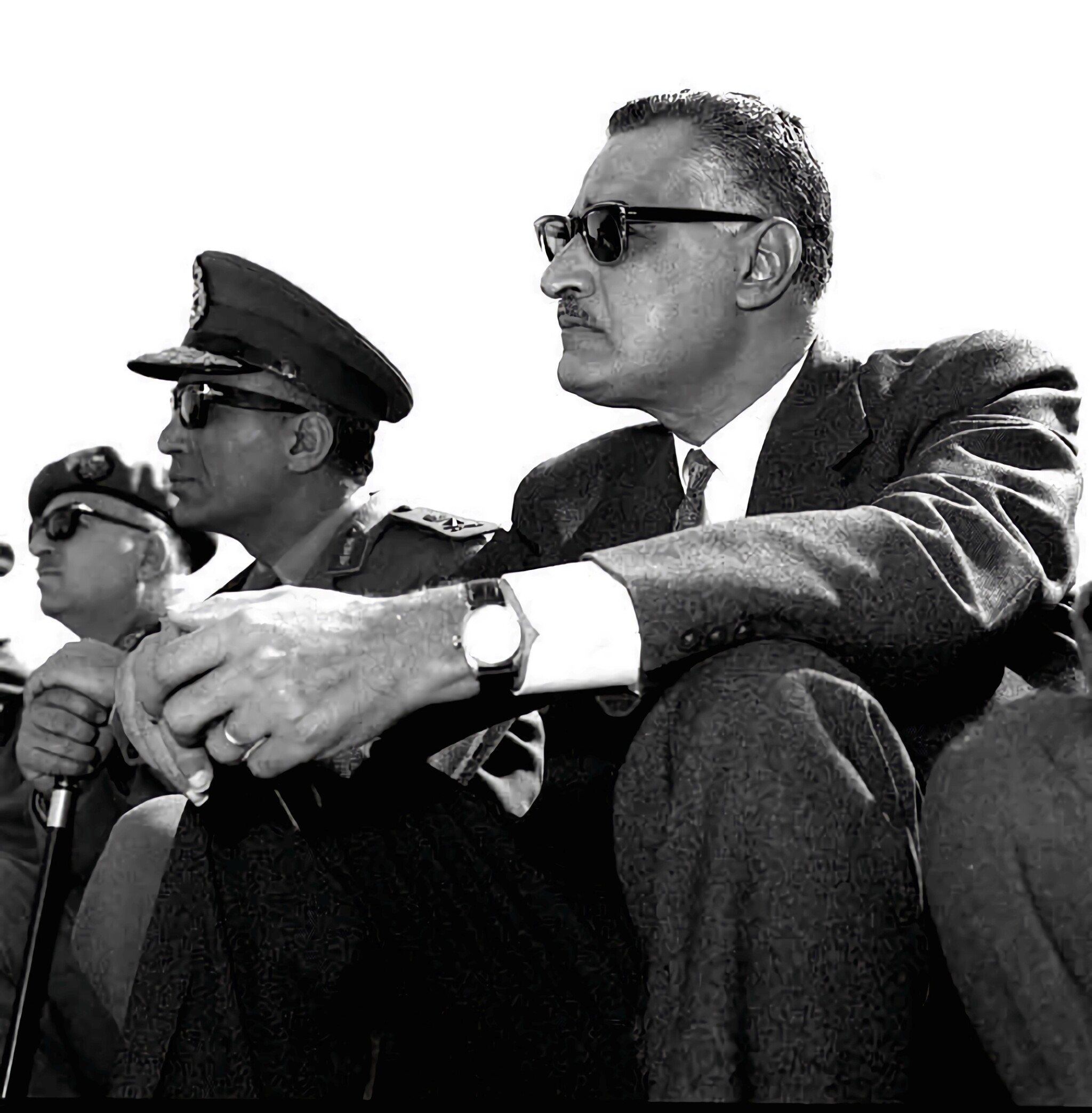
And then there’s Gamal Abdel Nasser the Egyptian president whose gold Rolex Day Date with Arabic numerals, gifted by Anwar Sadat in 1963, is the stuff of legend.
The watch was engraved with the words “Mr. Anwar El Sadat, 26-9-1963.” Two leaders, one friendship, one watch and a story that still ticks.
The Gift That Measures More Than Time
When you think about it, the act of gifting a watch in the Arab world isn’t really about the object at all. It’s about what the object stands for a relationship, a story, a shared moment in time.
It’s a beautiful paradox, giving someone something that measures time, yet becomes timeless itself. because in the end, that’s the true art of gifting in Arab culture the ability to turn a gesture into legacy.
Across the Arab world, a gifted watch has always meant more than its movement or metal. It’s a gesture that carries legacy the unspoken poetry of time shared, of gratitude made visible. Whether exchanged between leaders, offered at weddings, or given to mark success, these watches aren’t trophies. They are testaments to respect, to connection, to continuity.
In a culture where generosity is an art form, timepieces have become its modern canvas. The shimmer of gold, the precision of Swiss steel they all tell stories of lineage, of promise, of pride.
Because here, gifting a watch isn’t about counting minutes. It’s about honoring moments. And as the hands turn, generation after generation, the true measure isn’t time itself it’s the grace with which it's given.