
Christiaan van der Klaauw Planetarium Meteorite
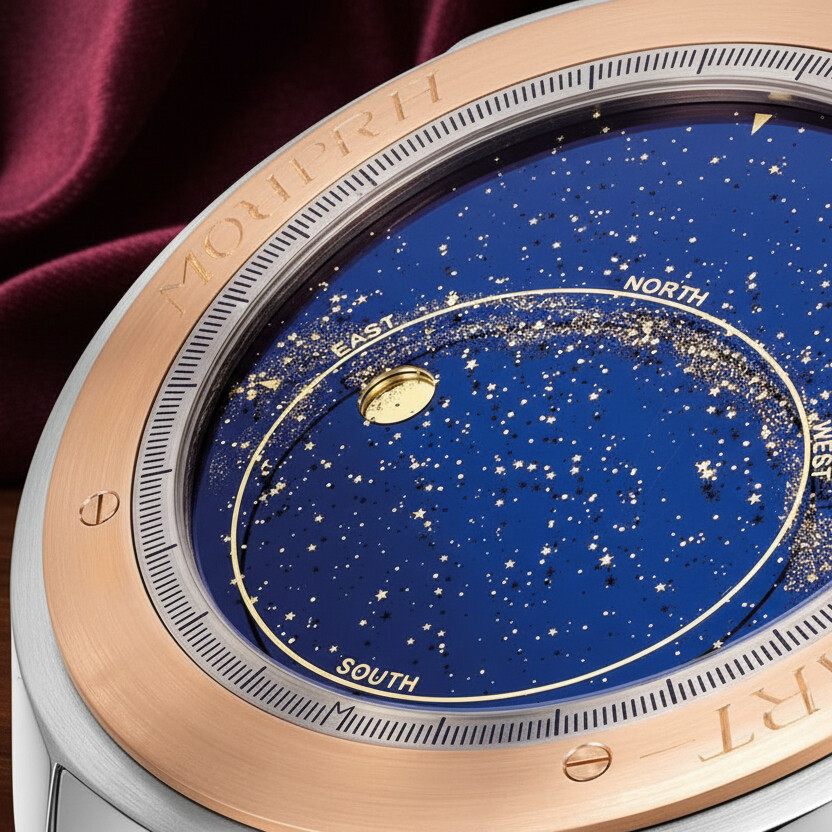
The Solar System in Miniature
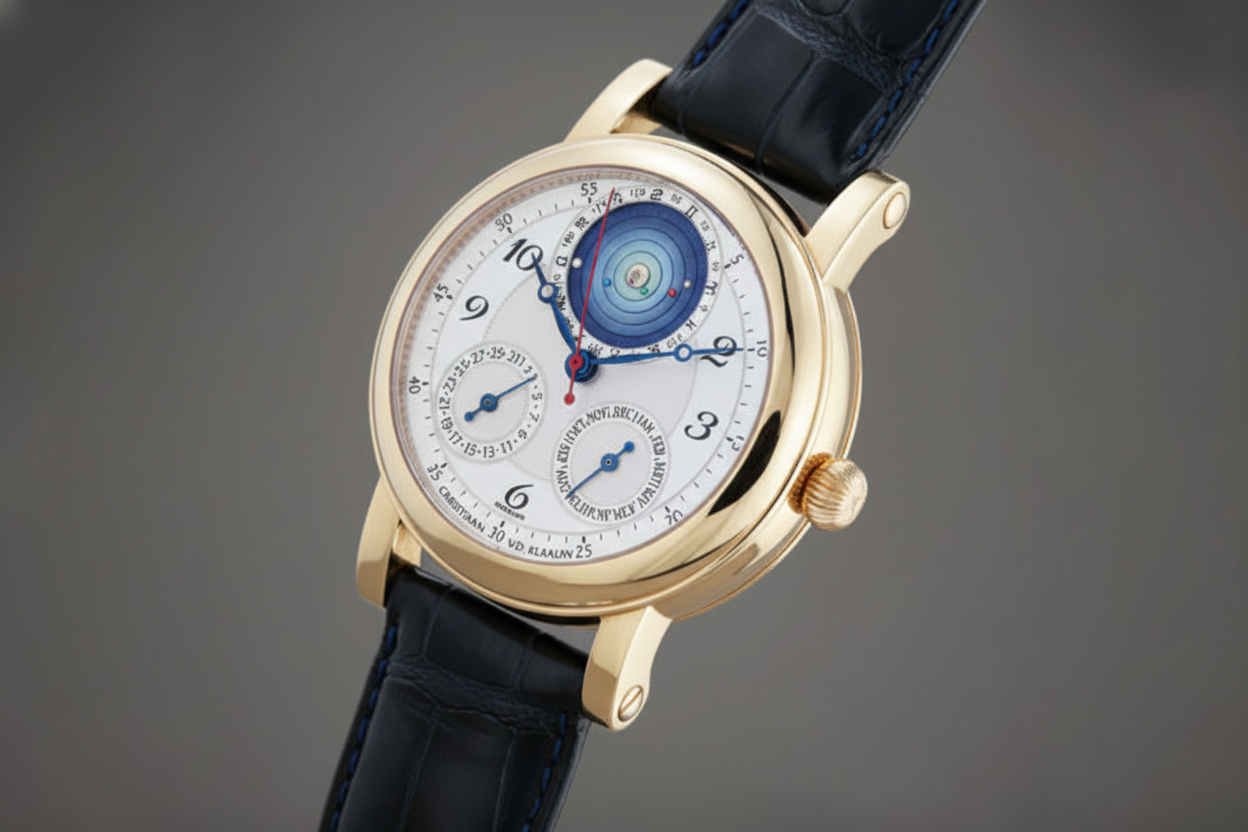
A timepiece that serves as a reminder of your place in the universe has a subtly humble quality. The Christiaan van der Klaauw Planetarium Meteorite, a cosmic masterpiece from the Dutch atelier that truly puts the solar system on your wrist, is one of the few clocks that perfectly captures that impression.
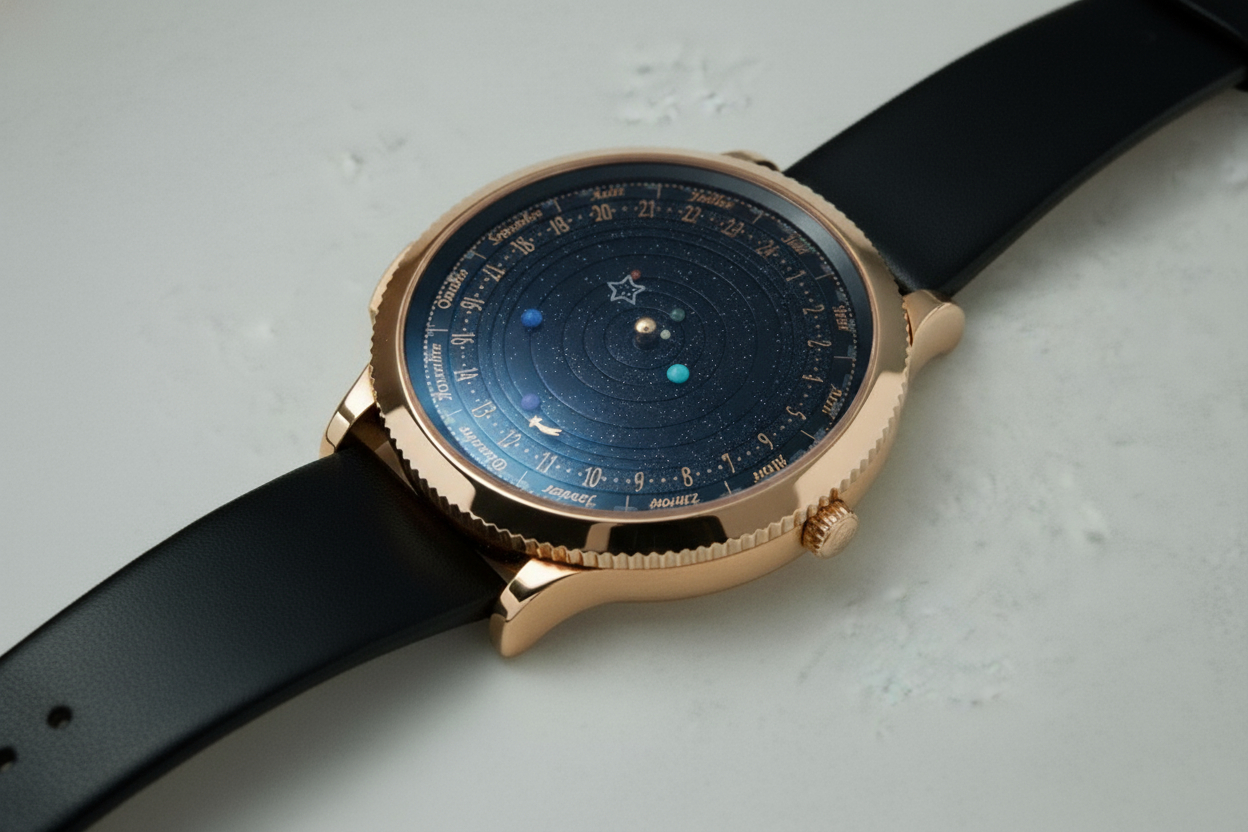
This is the smallest mechanical planetarium ever made, a poetic device that shows the orbits of Mercury, Venus, Earth, Mars, Jupiter, and Saturn around the Sun in real time. It’s more than just another astronomical complication. The cosmic idea is carried to its logical conclusion in this special Meteorite edition, where the dial itself is cut from an ancient Muonionalusta meteorite, a fragment older than Earth.
When it comes to planetarium wristwatches, Christiaan van der Klaauw stands almost entirely alone. The Dutch atelier holds much of the intellectual property behind the complication, giving it near-total command over this miniature cosmos of horology. Yet that hasn’t stopped CvdK from one-upping itself. The result is the Grand Planetarium Eccentric Meteorite the most complete representation of our solar system ever placed on a wrist.
Christiaan van der Klaauw is virtually unique when it comes to planetarium timepieces. The Dutch atelier has almost complete control over this tiny universe of horology since it owns much of the intellectual property behind the complication. However, this hasn’t stopped CvdK from outperforming itself. The Grand Planetarium Eccentric Meteorite, the most comprehensive depiction of our solar system ever put on a wrist, is the outcome.
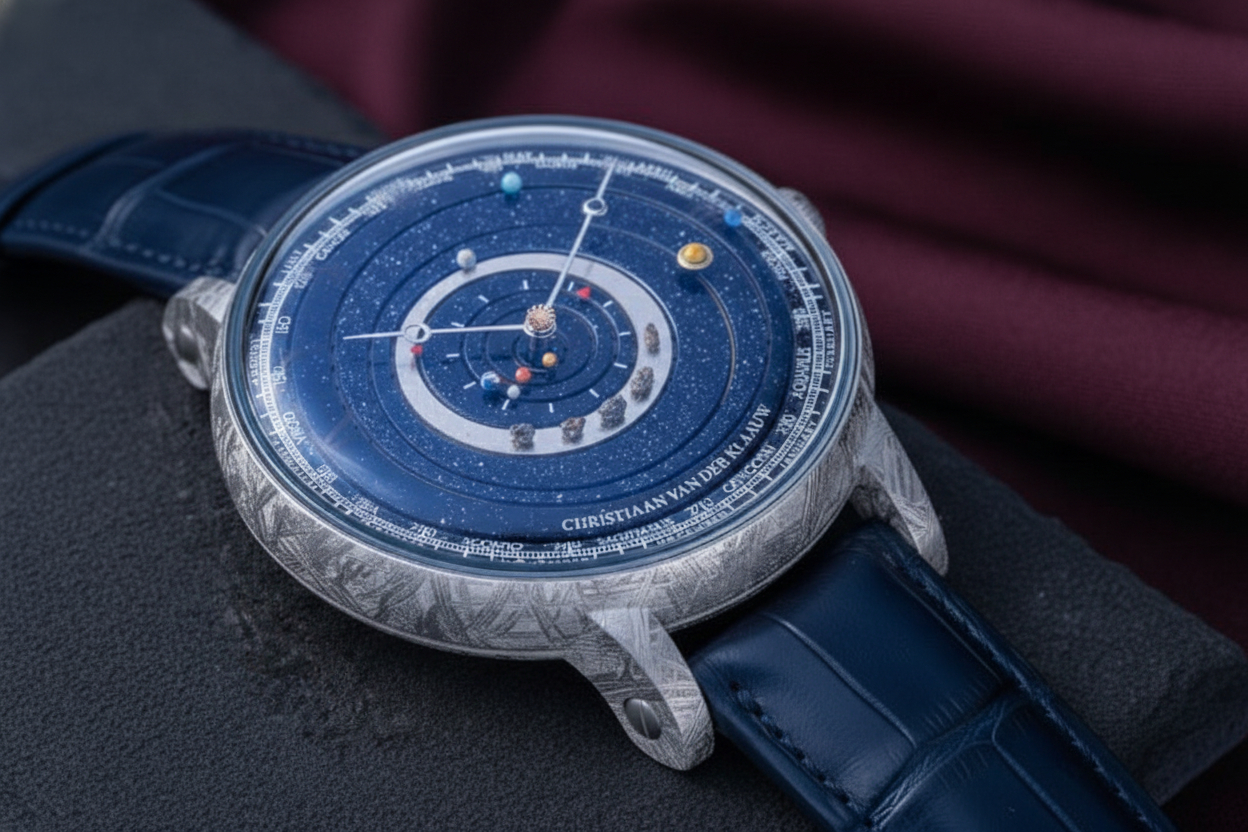
Both philosophically and visually, it is an overtly maximalist work of art. The dial is a maelstrom of celestial motion, full of astronomical detail, while the solid 44 mm meteorite case exudes substance and character. This new Meteorite version, which builds on the Grand Planetarium Eccentric that debuted in 2024, takes the idea to a cosmic level by adding an asteroid belt that is adorned with fragments of meteorite that once originated from Mars.
Planned as a limited edition of just three pieces, the scarcity of usable meteorite might mean only two will ever be completed making this already otherworldly watch even more elusive.
At the heart of the dial, the Sun serves as a quietly brilliant reminder of motion it’s not just decorative but functional, completing a full rotation once per minute. It’s a subtle but mesmerizing cue that the entire watch, like the cosmos it represents, is alive and in motion.
Initial Thoughts
The planetarium remains one of the most poetic complications in all of watchmaking precisely because of its uselessness. Unlike a chronograph or perpetual calendar, it offers no practical utility only perspective. And yet, that’s what makes it so profoundly human. For millennia, we’ve gazed at the stars, trying to understand our place among them. A watch like the Eccentric Meteorite distills that age-old pursuit into a wrist-sized universe a mechanical reflection of our enduring curiosity.
There’s also something strangely humbling about its cosmic pace. On this dial, Neptune creeps so slowly around the outer edge that even after two decades of wear, it will have barely shifted. The glacial tempo is a reminder of how small and fleeting our own moments are and how beautiful it is that a watch can make us feel that.
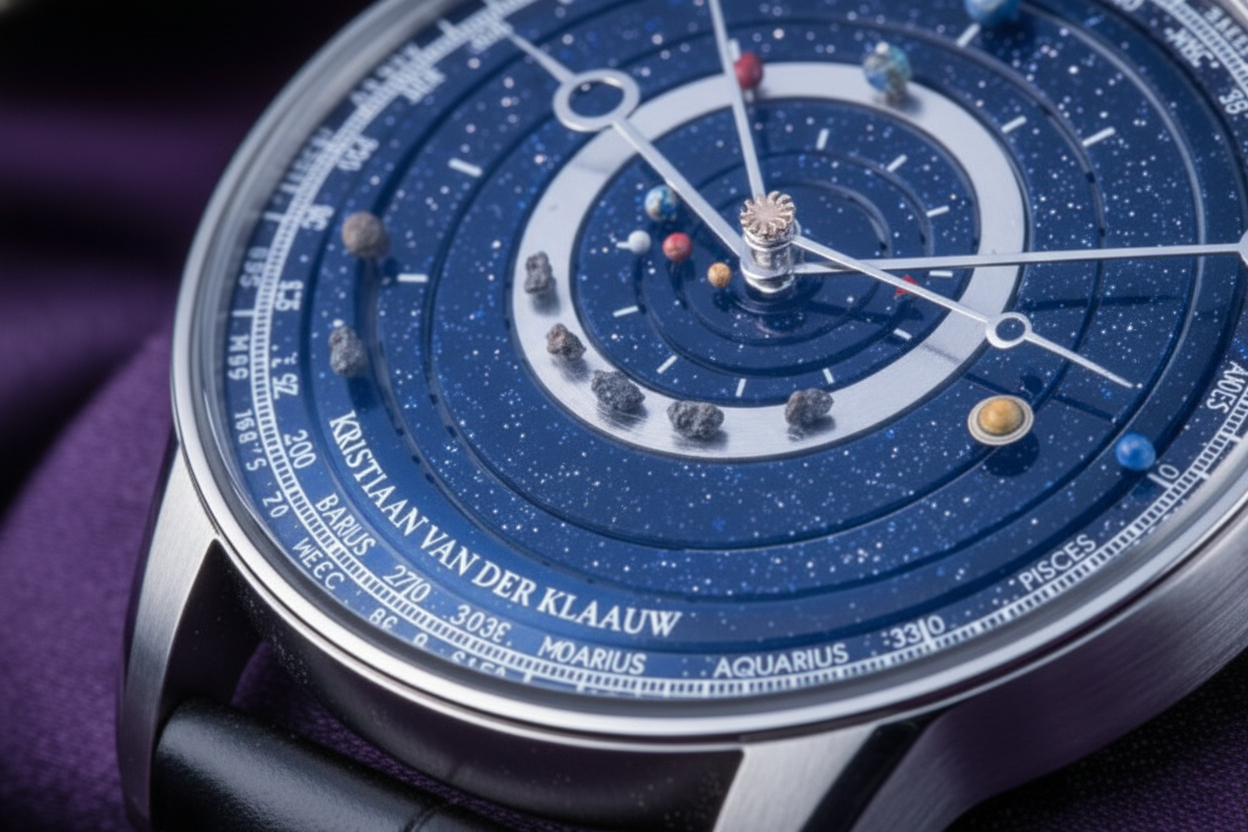
Naturally, the raison d’être of the Eccentric Meteorite lies in its dial a breathtaking stage of aventurine glass that hosts a fully realized miniature of our solar system. All eight planets orbit the central hand stack in realistic, eccentric ellipses, their motions a quiet choreography of cosmic mechanics. Beyond simply telling the time and, in a poetic sense, even the date the dial elevates astronomical display into art. Each planet is hand-painted, while the asteroid belt between Jupiter and Saturn is composed of actual Martian meteorite fragments, lending the composition both authenticity and narrative depth.
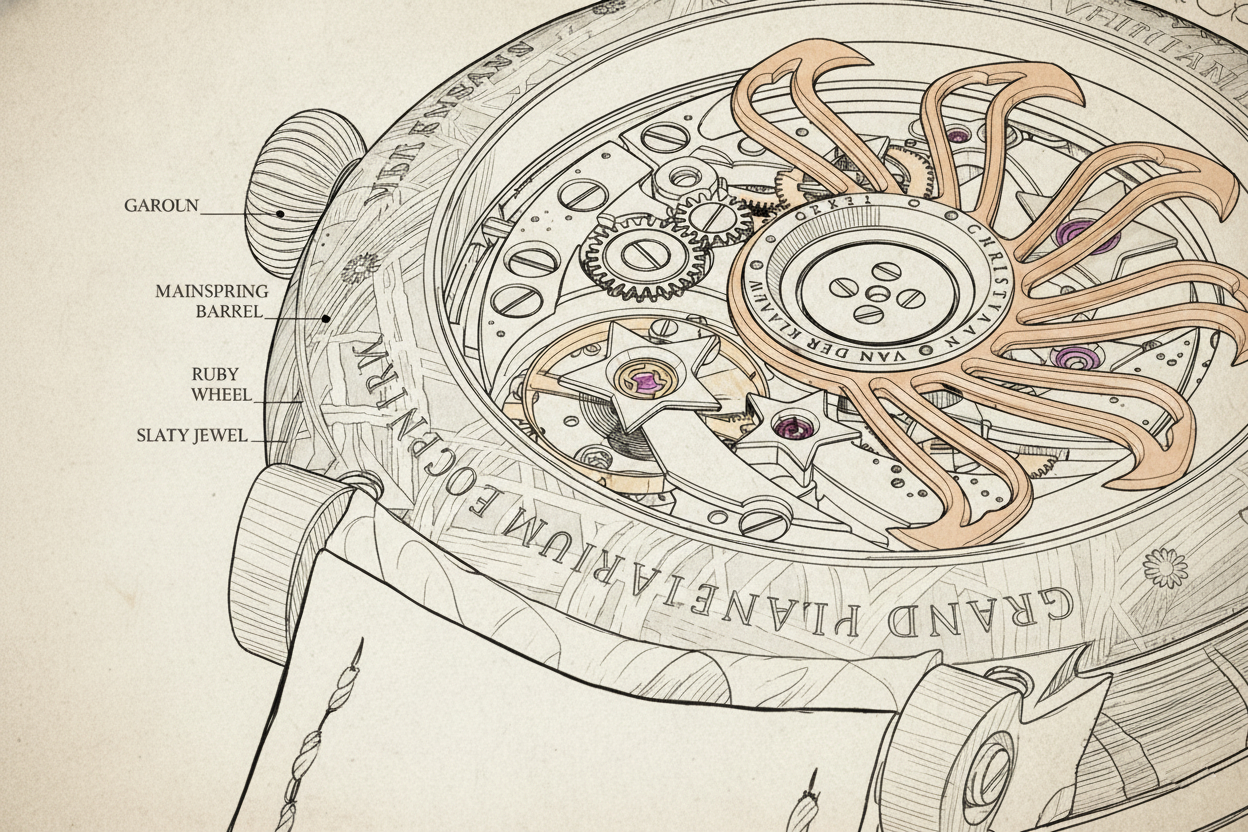
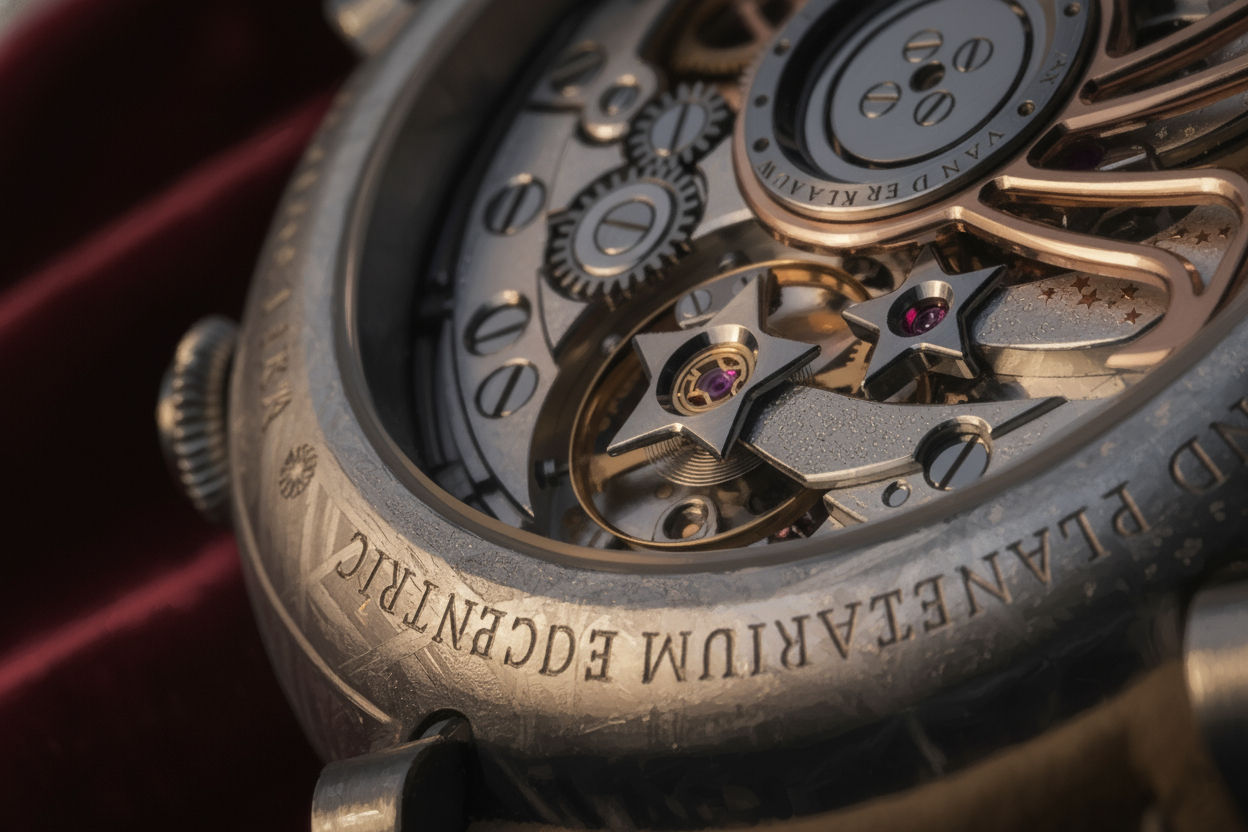
The most dramatic shift from its predecessor, however, is the 44 mm meteorite case itself. In watchmaking, meteorite is almost always confined to the dial a visual novelty, not a tactile one. Here, it forms the entire body of the watch, turning a celestial relic into wearable sculpture. The result is unexpectedly compelling: despite its otherworldly heft, the case feels surprisingly comfortable on the wrist, and at just over 14 mm thick, it wears with balance and intention. In both size and spirit, the proportions feel exactly as they should grand, but never gratuitous.
eneath all the celestial spectacle beats a movement worthy of its orbit. The planetarium module is driven by the CKM-01, a premium automatic movement crafted in Sirnach by none other than Andreas Strehler. Though this same 3 Hz platform has appeared in the work of other independents, it remains a quietly impressive caliber robust, refined, and boasting a 60-hour power reserve.
Historically, Christiaan van der Klaauw has relied on third-party engines often dependable workhorses like the ETA 2824-2 as the base for its astronomical complications. The use of a movement from Strehler, one of Switzerland’s most respected independent watchmakers, marks a meaningful evolution for the brand. It elevates the Eccentric Meteorite both technically and symbolically, reinforcing its standing not just as a piece of celestial art, but as a bona fide achievement in modern mechanical watchmaking.
Of course, cosmic beauty comes at a cosmic price. The meteorite case and the addition of the asteroid belt don’t just expand the visual universe of the Eccentric Meteorite they also send its price into orbit. At roughly US $725,000, this edition costs nearly three times as much as its 18k rose gold predecessor. On purely rational terms, that premium is difficult to defend. Yet in the rarefied world of Christiaan van der Klaauw, rationality rarely drives desire. With only a handful of examples expected to exist and each containing literal fragments of Mars it’s hard to imagine collectors hesitating for long.
Final Thoughts
The Grand Planetarium Eccentric Meteorite isn’t just another iteration of an existing complication it’s a statement about what independent watchmaking can be when it dreams on a cosmic scale. It doesn’t chase practicality or subtlety; instead, it celebrates humanity’s timeless urge to map the heavens and hold a piece of them in our hands. Between its meteorite case, Martian dust, and the slow dance of its planets, it reminds us that time is vast and that watchmaking, at its best, can still make us feel small in the most wonderful way.