
How Three Centuries Of Innovation Turned Timekeeping Into An Art Form
You would be mistaken to believe that punctuality is a contemporary art form; it was essentially developed in the 18th century. In those days, timepieces were proudly displayed as symbols of elegance, yet they were only as accurate as a sandstorm weather forecast. These days, your smartwatch can monitor your stress levels, steps, and pulse. If theirs could make it through the day without losing three hours, people were ecstatic three hundred years ago.
At Horology Forum 10 during Dubai Watch Week, enthusiasts and historians recounted how centuries of experimentation, failure, and epiphanies transformed timekeeping into a science and art, and how the Arab world still has a fixation with it today.
When Watches Were Wobbly but Wonderful
Imagine living in the 1600s without Wi-Fi, matcha and certainly no atomic clocks. The first “portable” watches were essentially big, bulky, and always incorrect tiny church towers that you could wear with one hand. The first timekeeping device, the Verge escapement, required frequent rewinding and heavenly patience because to its inconsistency. However, as one watchmaker remarked, “It danced, but it danced badly.”
It was a start, though. With the invention of the waistcoat and pockets, men could now take a small piece of mechanical chaos with them wherever they went. An technical marvel and a great way to strike up a conversation while you’re two hours early for an appointment you’re still going to miss.
The Great Leap Forward (Give or Take Ten Minutes)
Enter Robert Hooke and Christiaan Huygens, who around the 17th century decided that being wrong by a few hours wasn’t good enough. They introduced the balance spring, the beating heart of the modern watch, which cut inaccuracy to a mere ten minutes a day. Finally, people could set appointments they had a fighting chance of keeping. Then came the Cylinder escapement, because apparently, thin was in both in waistcoats and in watches. For the first time, elegance joined accuracy, and the wrist’s ancestor, the pocket watch, became a true fashion statement.
When the Watch Learned to Think
Thomas Mudge’s invention of the lever escapement in the 18th century was a silent revolution that gave timepieces their beloved tick-tock heartbeat and enabled them to start themselves. Finally, a watch could function without a skilled tap. Even the best clocks became a bit cranky when it was too hot, so Pierre Leroy devised the brilliant notion to adjust for temperature variations. In order to maintain a stable time, his split bimetallic balance wheel employed two metals that expanded at opposite speeds. Consider it the first “climate control” system in horology.
Longitude and the Invention That Saved Sailors
Fast-forward to the era of empire, when being off by a few seconds could strand a ship hundreds of miles from safety. Enter John Harrison, a man who spent 36 years solving the Longitude problem and proving that watchmaking could literally save lives.
Part miracle, part legend, his H4 chronometer clock was accurate to within seconds of the day. It was deemed so important by the British government that it was designated as a state secret. Harrison’s masterpiece at the time was the GPS of the Age of Sail; today, we gripe when our phone clock is three seconds off.
The 21st-Century Twist
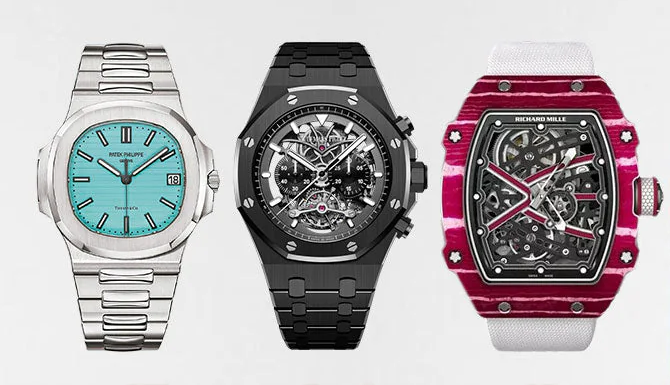
Fast-forward again, this time to Dubai, where Seddiqi Holding hosts Dubai Watch Week, gathering the heirs of those early innovators. Instead of verge escapements, we now have tourbillons, perpetual calendars, and sapphire cases that cost more than most apartments. Yet the obsession is the same: precision, beauty, and bragging rights.
Where sailors once relied on chronometers to chart the seas, today’s collectors turn to their watches to chart style and taste. Where artisans once pursued perfect time, modern brands pursue perfect craftsmanship and storytelling. The spirit, however, remains unchanged, a shared devotion to beauty, precision, and the quiet pride of owning something extraordinary
Why History Still Ticks
The history of horology is dynamic rather than dusty. Every tick of a contemporary wristwatch is a hint from a time when creativity, experimentation, and trial were all part of the past. Previously navigating oceans, art today navigates identities, particularly in the Arab world where collecting has evolved into a statement of ancestry and intelligence rather than merely wealth. As the old watchmakers might say, perfection takes time. Fortunately, they gave us something beautiful to measure it with.