
Patek Philippe Star Caliber 2000 Under the Hammer at Sotheby’s Abu Dhabi
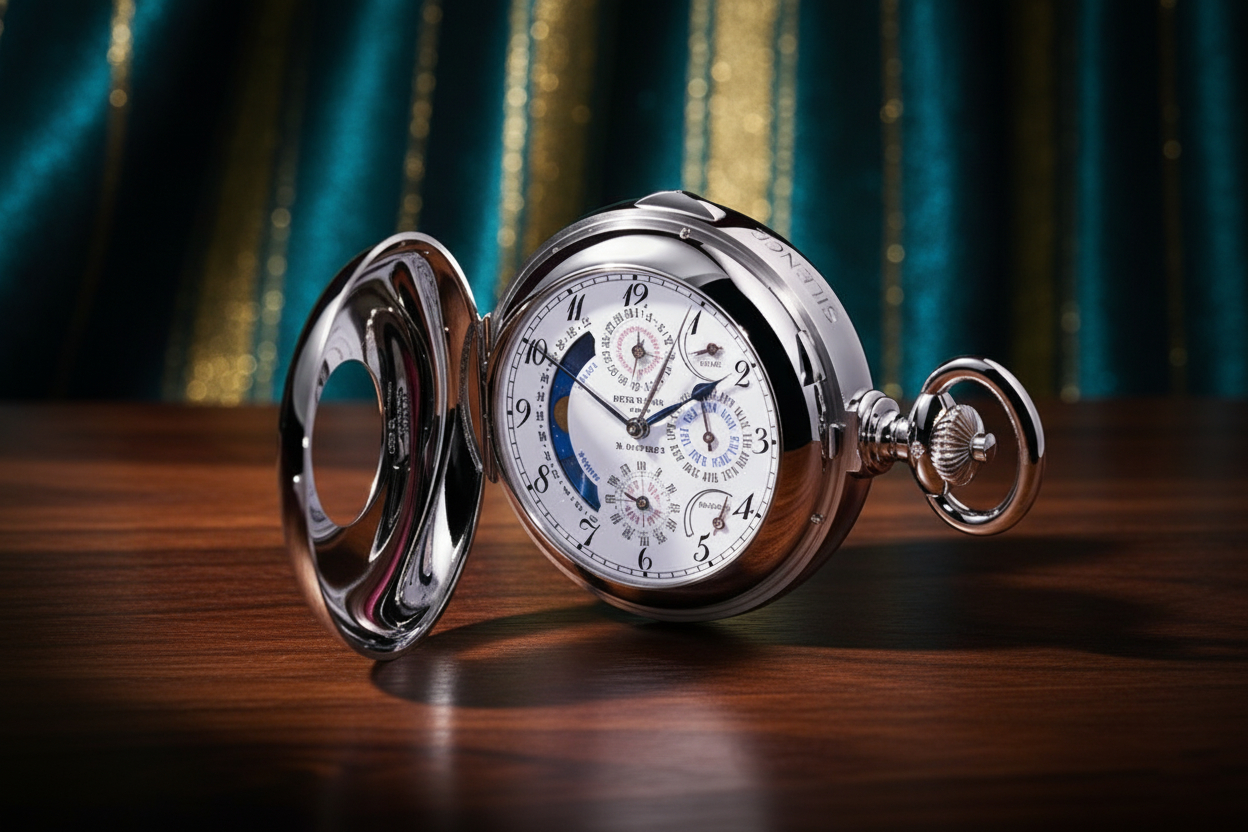
The Patek Philippe Star Caliber 2000 stands as a true masterpiece of modern horology a pocket watch that redefined what mechanical ingenuity could achieve. Created to celebrate the dawn of a new millennium, it was once the fourth most complicated timepiece ever made. Yet, beyond its record-breaking complexity, its brilliance lies in the harmony of art, engineering, and imagination that reshaped the very concept of grand complications.
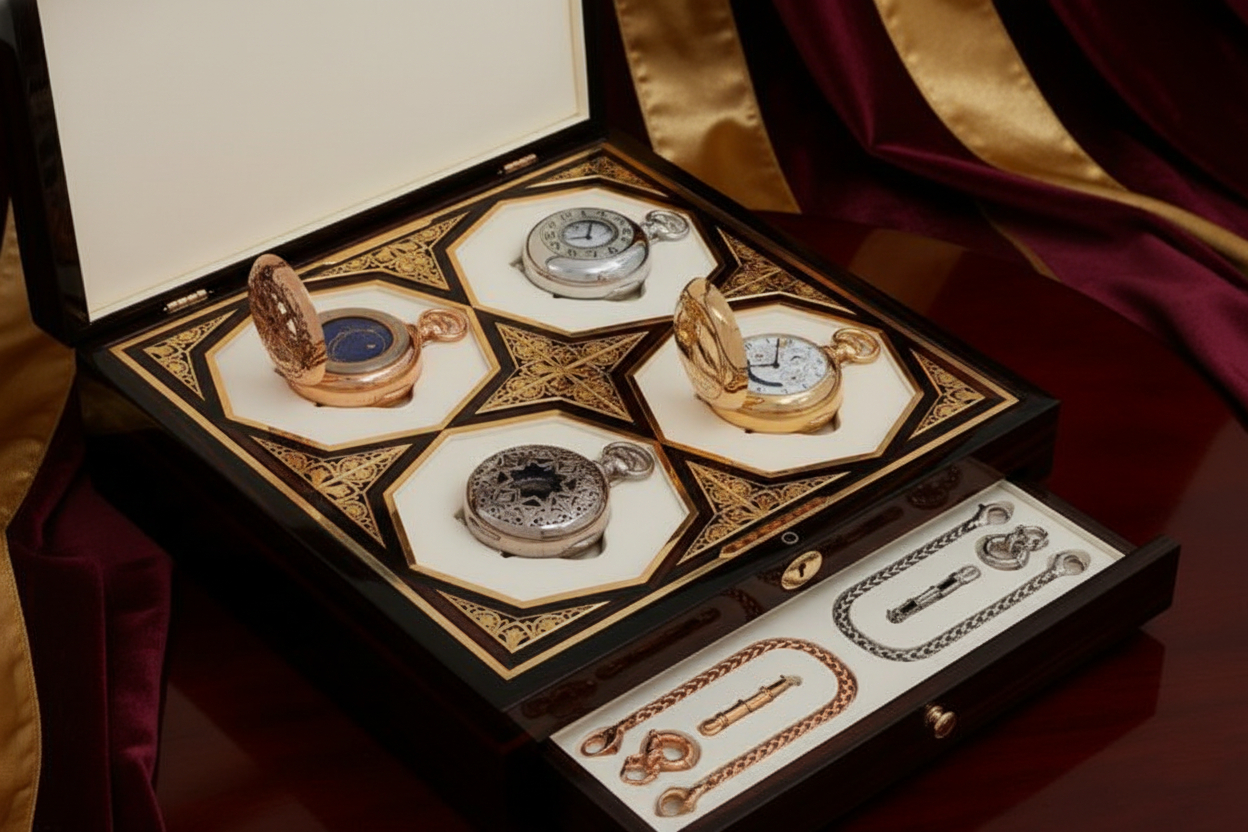
Now, an original complete set of four Star Caliber 2000 watches is set to make history once again. Sotheby’s will offer this exceptional collection at its first ever watch auction in Abu Dhabi this December the first full set ever to appear publicly. A moment destined to captivate the world’s most discerning collectors and horological institutions alike.
The Technical Significance of the Star Caliber 2000
The Patek Philippe Star Caliber 2000 may not have held the title of “the world’s most complicated watch,” but that was never really the point. What makes it extraordinary is how it redefined what mechanical mastery could look like at the turn of the millennium When it launched, the Star Caliber 2000 ranked fourth in the hierarchy of complications following Patek Philippe’s own Caliber 89, the legendary Henry Graves Supercomplication of 1932, and the lesser-known but equally impressive Leroy 01 from 1904. Yet, where others chased complication counts, the Star Caliber 2000 pursued coherence. Every mechanism served a purpose, every display felt deliberate a hallmark of Patek’s philosophy at its most poetic.
Two and a half decades later, it’s been surpassed on paper by newer feats from Vacheron Constantin and Audemars Piguet, but the Star Caliber 2000 remains a reference point a moment when Patek Philippe showed that complexity, when done right, could still feel effortless.
But the Star Caliber 2000 was never meant to be defined by rankings or numbers that kind of scoreboard is, at best, superficial. Its true genius lies in the substance of its innovation. Beneath the gold case lives a suite of groundbreaking mechanisms, protected by six patents four tied to complications and two to ingenious utility systems each representing a genuine leap forward in how watchmakers think about mechanical architecture.
More importantly, the Star Caliber 2000 stands as Patek Philippe’s last great super-complication pocket watch, the final expression of a tradition that stretches back to the Graves era. It remains not just a technical marvel, but a benchmark in modern watchmaking a reminder that true mastery isn’t measured by how many complications you can fit into a case, but by how seamlessly they all come together.
mong the Star Caliber 2000’s many marvels, its grand sonnerie stands out as the most poetic and the most sonorous. The chiming sequence follows the same musical pattern as Big Ben’s legendary bells in London’s Elizabeth Tower, ringing out with five gongs that fill the air with depth and resonance. When activated, the grand sonnerie performs a symphony of time: the quarters strike first, followed by the hours a deliberate inversion of convention. Even the minute repeater plays by its own rules, sounding in a distinct order of quarters, then minutes, then hours a subtle but elegant rethinking of a centuries-old tradition.
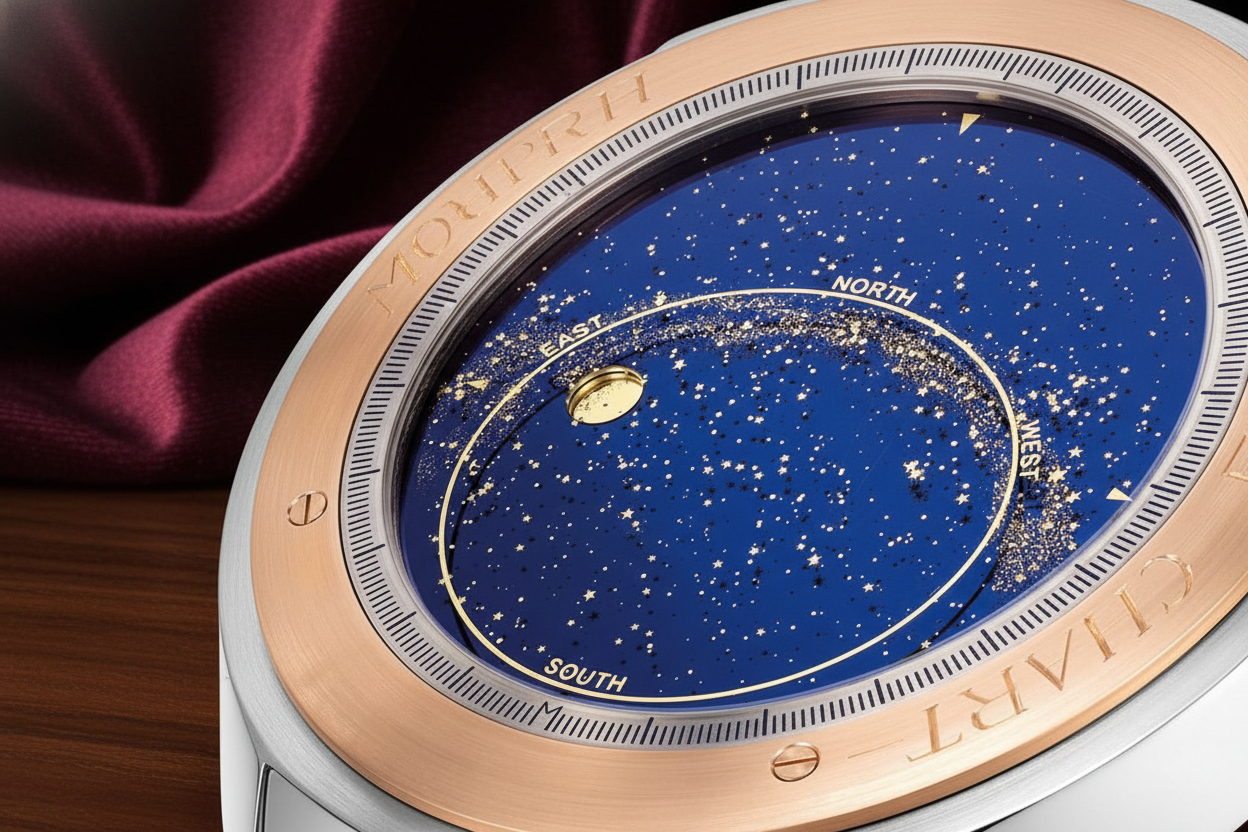
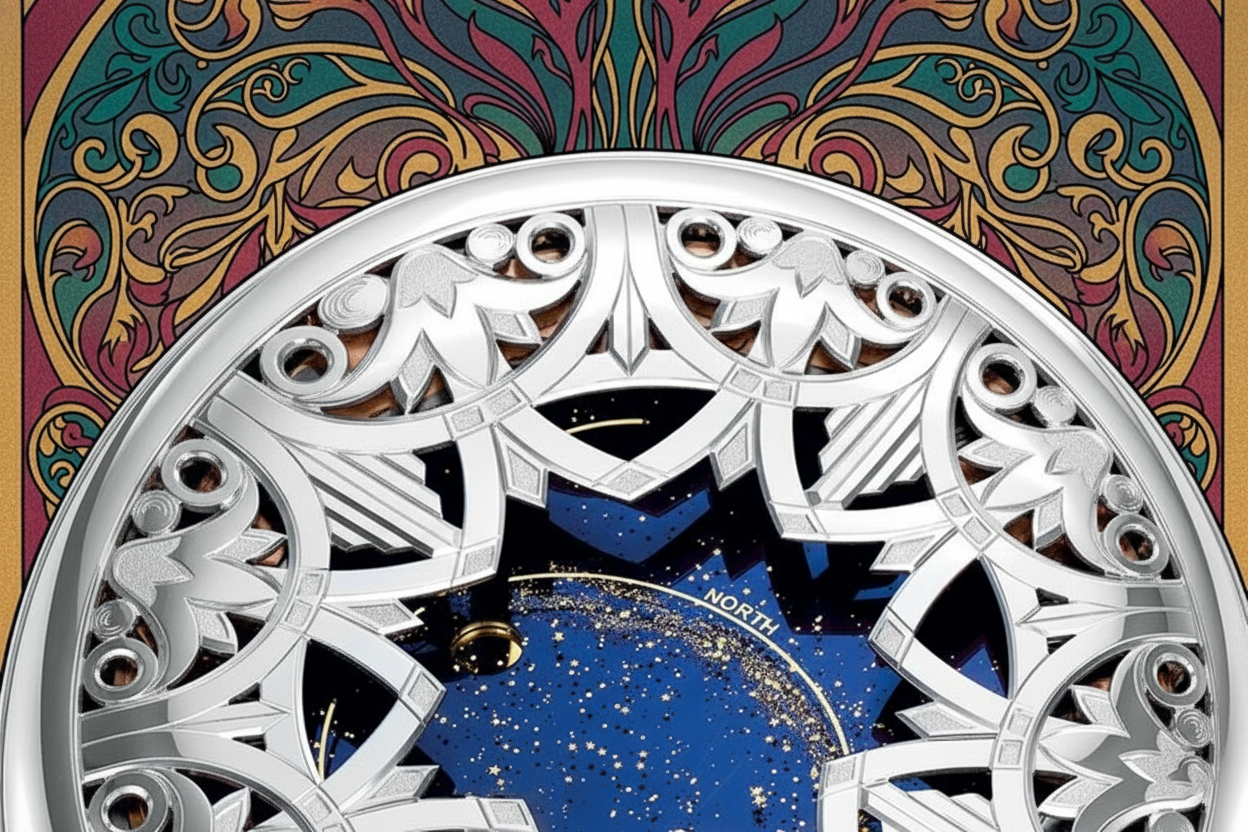
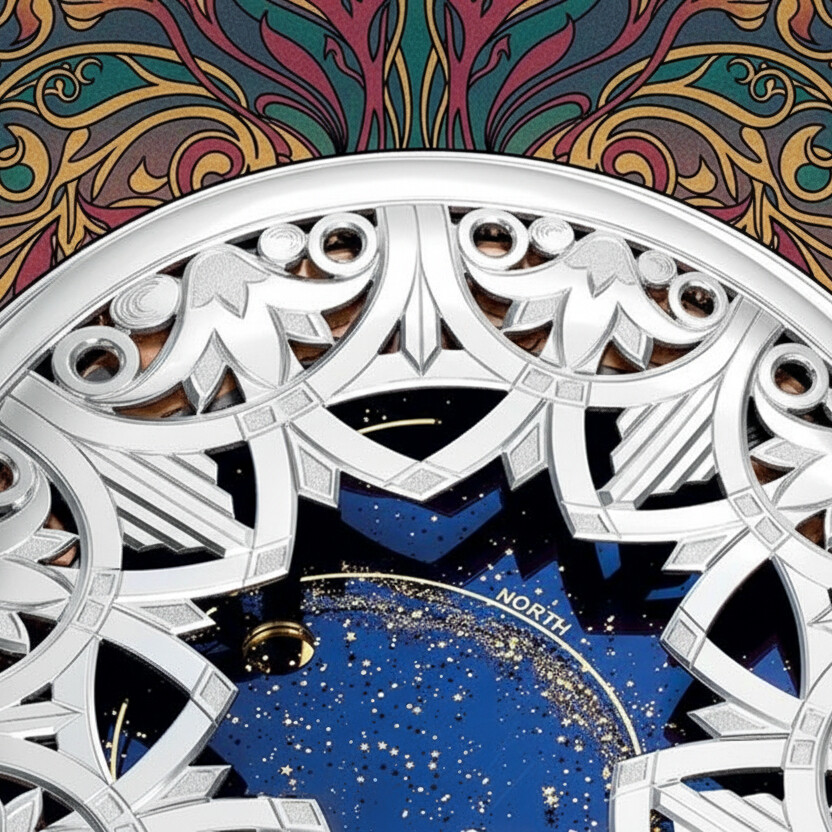
Then there’s the watch’s celestial centerpiece the star chart with orbital moonphase, a first of its kind when introduced. This astronomical display tracks the night sky with mesmerizing precision, mapping the stars as seen from Geneva. The concept would later inspire icons like the Sky Moon Tourbillon ref. 5002 and the Celestial ref. 5102, but it all began here with the Star Caliber 2000, where art and astronomy met inside a pocket watch.
A Masterwork Born of Collaboration
“Every great complication is a symphony and the Star Caliber 2000 had its orchestra.”
Like every true masterwork of haute horlogerie, the Star Caliber 2000 was the result of collective genius. Patek Philippe turned to the legendary Jean Pierre Hagmann to craft the cases, each one a study in balance and proportion. The finishing touch came from Christian Thibert, whose meticulous hand-engraving transformed metal into art.
At the bench, Jean-Pierre Musy led the team responsible for assembling and regulating each movement 1,118 components per watch, each polished, adjusted, and harmonized until the entire mechanism sang in perfect mechanical rhythm. It was an achievement that could only be realized through the fusion of experience, precision, and patience.
Details on the Present Lot
Patek Philippe produced just five complete four-watch sets of the Star Caliber 2000, for a total of 20 pieces. One set was crafted entirely in platinum, while the other four were presented in yellow gold, rose gold, white gold, and platinum. Production began with movement number 3’200’001 and concluded with 3’200’020, marking one of the most exclusive limited runs in modern horology.
The set appearing at Sotheby’s Abu Dhabi represents the fifth and final ensemble, comprising movement numbers 3’200’017 to 3’200’020. For collectors, it’s more than an auction lot it’s the closing chapter in Patek Philippe’s era of monumental pocket watch innovation.